
TL;DR
Value investing is buying shares in a business for meaningfully less than its underlying worth, then waiting for the market to recognise that value. It rests on two ideas from Benjamin Graham and Warren Buffett: every stock has an intrinsic value independent of its price, and buying with a margin of safety protects you when your estimate is wrong.

Value investing is a strategy of buying shares in a business for meaningfully less than its underlying worth, then waiting for the market to recognise that value. Pioneered by Benjamin Graham and made famous by Warren Buffett, it rests on two ideas: every stock has an intrinsic value independent of its price, and buying with a margin of safety protects you when your estimate is wrong.
Price is what you pay, value is what you get
The foundation of value investing is the distinction between price and value. Price is the number quoted on the exchange, set moment to moment by buyers and sellers. Value is what the business is actually worth, the cash it will generate for its owners over its lifetime. The two are often close, but in moments of fear or euphoria they can drift far apart. The value investor's entire job is to act on that gap, buying when price falls well below value and staying patient when the two are aligned.
“Price is what you pay. Value is what you get.”, Warren Buffett. That single sentence captures the discipline: a falling share price is not automatically a loss, and a rising one is not automatically a gain. What matters is the relationship between the two.
Mr. Market: your servant, not your guide
Graham's most useful mental model is Mr. Market, an imaginary business partner who, every day, offers to buy your shares or sell you his. Some days he is euphoric and quotes silly-high prices; other days he is despairing and offers to sell cheaply. The key insight is that Mr. Market is there to serve you, not to instruct you. You are free to ignore him until his price is attractive. Treating market prices as opportunities rather than verdicts is what separates investing from speculating, and it is the emotional core of the whole approach.
Intrinsic value: estimating what a business is worth
Intrinsic value is an estimate of a company's true worth, based on the cash it can generate, its assets and its earning power. There is no single correct figure, it is always a reasoned range. The most complete method is a discounted cash flow (DCF), which projects future free cash flow and discounts it to today using a rate such as the WACC. Simpler screens, like Graham's, approximate value from earnings and book value, and the glossary entry on intrinsic value walks through the idea in more depth.
Worked example. If a DCF puts a company's intrinsic value at roughly $90-$110 per share and the stock trades at $65, a value investor sees a candidate worth investigating, the price sits well below even the low end of the estimate. Notice that the answer is a range, not a point: precision here is false comfort, and the width of the range tells you how much you really know about the business.
Margin of safety: the central discipline
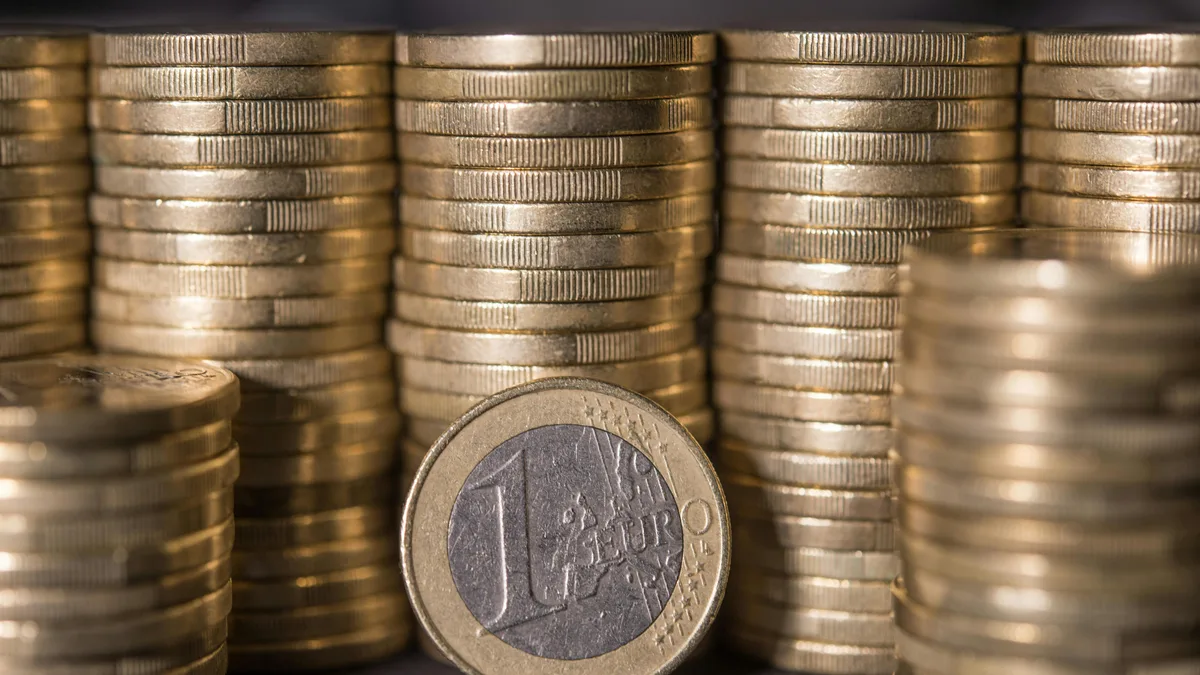
Because every valuation rests on assumptions that may prove wrong, value investors insist on a margin of safety, buying only when the price is well below their estimate of intrinsic value. The discount is the buffer that protects capital if the future turns out worse than expected. For bargain stocks, Graham wanted to pay two-thirds of his value estimate or less. The larger the uncertainty around a business, the larger the margin of safety it demands; you can size that discount with the margin of safety calculator, and the glossary defines the term precisely.
Quality matters as much as cheapness
Classic Graham-style investing hunted for statistically cheap stocks regardless of quality. Buffett, influenced by Charlie Munger, evolved the approach: it is far better to buy a wonderful business at a fair price than a fair business at a wonderful price. Modern value investing weighs durable competitive advantages (a “moat”), consistent free cash flow, sensible debt and capable management alongside the raw valuation. A cheap price means little if the business is quietly deteriorating, the cheapness can simply be the market pricing in a decline you have not yet noticed.
The value investor's process
A repeatable process keeps emotion out of the decision. Stay within your circle of competence and only value businesses you genuinely understand. Assess business quality first, its moat, cash generation, balance sheet and management, before you look at the price at all. Then estimate intrinsic value as a range, using more than one method so a single flawed model cannot fool you. Demand a margin of safety before buying, letting the price come to you rather than chasing it. Finally, hold while the thesis holds, and sell when value is realised or the thesis breaks, not when the price merely wobbles. The Graham Number is a fast first screen for that process.
Common mistakes
A handful of errors trip up most beginners. The first is the value trap: a stock that looks cheap because the business is in permanent decline, cheapness alone is not a thesis. The second is anchoring to your purchase price instead of current intrinsic value, which tempts you to hold losers and sell winners for the wrong reasons. The third is ignoring currency: for global investors, a gain in the local currency can be a loss once converted home, which is why multi-currency value investing treats exchange rates as part of the margin of safety. The fourth is over-precision, treating a single DCF output as fact rather than testing a range of assumptions.
How Worthmap supports a value approach
Worthmap is built for investors who make their own decisions. The free calculators let you run the numbers yourself: the Graham Number for a quick conservative screen, the margin of safety calculator to size your discount, and the WACC calculator for the discount rate behind a DCF. A free account at my.worthmap.com adds a stock screener, to narrow down the companies worth studying, and AI analysis that walks you through the figures of a company you pick. The valuation itself stays your work. For investors whose assets span currencies, the tracker in that account records each asset in its own currency and shows the total in one base currency you pick. If the whole field is new to you, start with the investing for beginners hub and the companion guide on how to find undervalued stocks.
Open the Graham Number calculator
Summary
Value investing means buying a business for less than it is worth: the price-value gap, Mr. Market's daily quotes, and a margin of safety for a bad estimate.

Written by
Federico RomaldiCo-Founder, Worthmap
Published: June 6, 2026
Federico is a co-founder of Worthmap, a multi-currency net worth tracker with free investing calculators. He writes the site’s articles on value investing, fundamental analysis and tracking wealth held in several currencies. He is not a licensed financial adviser.
Comments
Be the first to comment on this article.