
TL;DR
Each greek answers one narrow question about an option's price. Delta is how much it moves when the share moves, gamma is how fast delta itself changes, theta is the value the clock takes out every day, vega is sensitivity to the market's expectation of future movement, and rho is sensitivity to interest rates, which most people can safely ignore. They are calculated from a pricing model rather than measured, and each is a snapshot taken with everything else held still, so they shift the moment the market does. For anyone buying options rather than selling them, theta and vega usually decide the outcome, not delta.
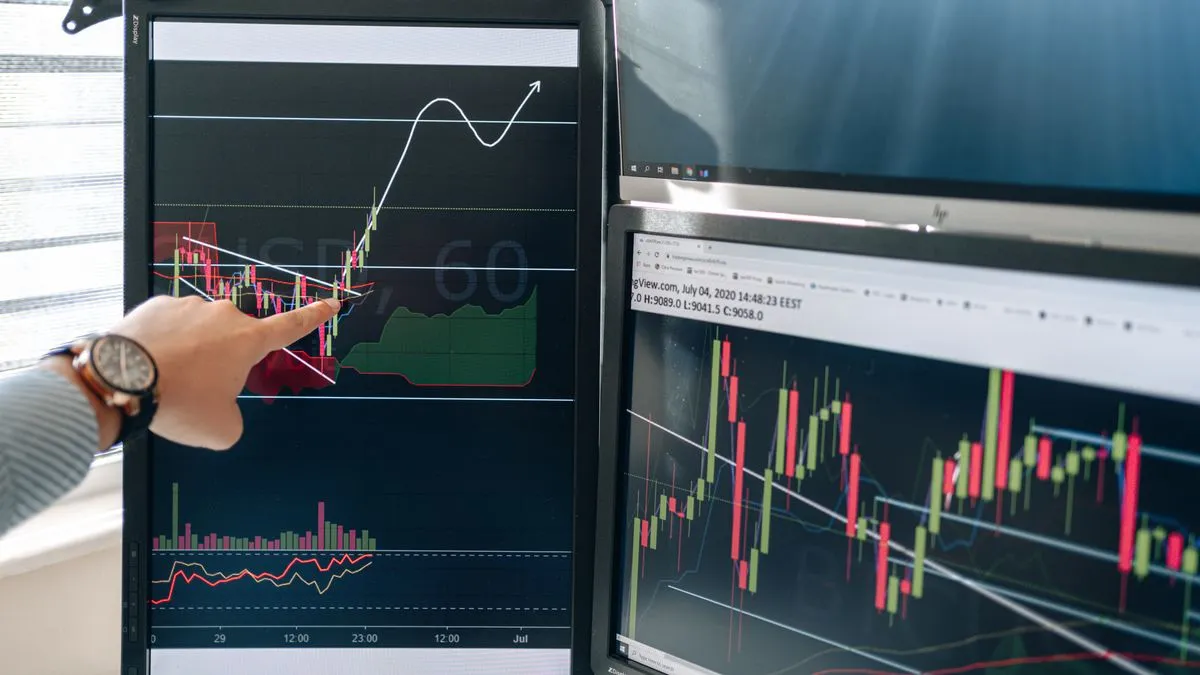
The greeks are not a strategy and they are not a forecast. Each one answers a narrow question: if a single input changes and everything else holds still, how much does the option's price move? Delta answers it for the share price. Theta answers it for the passage of the calendar. Take them one sentence at a time and an option chain stops looking like a wall of numbers and starts looking like a set of dials, each with its own effect on what you paid and on what you might get back.
Why one price needs five different sensitivities
A share gives you one number to follow. An option has several moving parts feeding a single price, and on any given day they can push in opposite directions. The share rises the way you hoped, and your call still ends the session lower, because a day of time value drained away while the market's expectation of future movement cooled at the same moment. Without a way to separate those forces you are left guessing which one beat you. That is the whole job of the option greeks: they break one confusing price change into named pieces you can attribute to a cause.
Delta: how much the option moves when the share moves
Delta is the first one to learn and the one you will reach for most. It tells you roughly how much the option's price changes when the share moves by one unit of currency. Say a call carries a delta of 0.60, a round number chosen purely as an illustration. The share climbs by 1 and the call gains about 0.60. The share falls by 1 and it hands most of that back. Calls carry positive delta because they gain when the share rises, and puts carry negative delta because they gain when it falls.
Delta also works as a rough exposure count. A standard listed equity option in the United States is written on 100 shares per contract, the convention set by the exchanges and The Options Clearing Corporation rather than by any individual broker, so one contract showing a delta of 0.40 behaves, for small moves, roughly like holding 40 shares. And because delta runs from near 0 for an option nowhere close to its strike up to near 1 for one deep in the money, many traders read it as a loose stand-in for the chance the contract finishes with intrinsic value. Useful habit, not a precise probability.
Gamma: how fast delta itself changes
Delta is not a fixed property of a contract. It moves as the share moves, and gamma is the number that measures that movement. High gamma means your delta is unstable: a modest run in the share can turn a position that behaved like 40 shares in the morning into one behaving like 70 by lunch. Gamma is largest for options sitting near their strike with little time left, which is exactly the moment people assume things are quiet. It is also the mechanical reason a sold option can hurt far more than the premium collected suggests. The seller's delta swings against them faster the further the share runs, so the loss accelerates rather than growing at a steady pace.
Theta: the value that drains away while you wait
An option with three months on it is worth more than the same option with three days on it, because more time means more chance for the share to reach a level that pays. Theta puts a number on what that clock costs per day. For a buyer it is negative every single day, weekends included, and on days when nothing whatsoever happens in the market. The drain is not even, either. It speeds up as expiry approaches, which is why a short-dated option needs the move to arrive soon rather than eventually.
Theta ambushes more beginners than any other greek. You read the direction correctly, the share drifted your way, and the option still finished the week lower, because time value bled out faster than intrinsic value built up. Nothing went wrong with the analysis. You bought something that was quietly billing you for every day you held it, and the share did not move enough to cover the bill.
Vega: what you pay for expected movement
Vega measures how much the option price changes when implied volatility moves by one percentage point. Implied volatility is the market's collective expectation of how much the share will swing between now and expiry, and it is not the same thing as how much the share has swung in the past. When that expectation rises, calls and puts both get more expensive, because a wider range of plausible outcomes makes every strike easier to reach.

This is what catches people around scheduled announcements. Expectation of movement builds into option prices in the days before a company reports, then collapses the moment the news is out and the uncertainty is settled, whichever way the share went. A holder can call the result correctly and still lose money, because they paid for uncertainty that no longer exists. Look only at the share price and that loss makes no sense at all. Vega is where it went.
Rho, and why it usually comes last
Rho measures sensitivity to interest rates, specifically the risk-free rate that the pricing model uses. Rates enter the maths for a plain reason: buying a call postpones paying for the shares, and money you have not spent yet can sit earning interest somewhere else, so that deferral is worth something. For a short-dated option on an ordinary share, the effect is tiny next to one day of theta or a single point of implied volatility. Rho starts to matter for long-dated contracts, and in stretches when rates themselves are moving quickly. Most of the time it is background noise, and it is fine to treat it that way as long as you know why.
The greeks are calculated, not observed
None of these numbers are measured in the market. They are outputs of a pricing model, the rates of change of the model's price with respect to each input, and the usual source is the Black-Scholes model or one of its descendants. Every greek on your broker's screen therefore inherits that model's assumptions: prices that move smoothly with no sudden gaps, and a volatility input that has to be supplied from somewhere. It is also why two platforms can show slightly different greeks for the same contract on the same afternoon. They are feeding in different volatility numbers, or handling an upcoming dividend differently. Treat a greek as a well-built estimate of sensitivity, not as a reading taken off an instrument.
One day, in round illustrative numbers
Suppose a call shows a delta of 0.50, a gamma of 0.05, a theta of 0.04 and a vega of 0.10. Every one of those is invented for the example. The share rises by 1, so delta hands you roughly 0.50 while gamma quietly lifts your delta to about 0.55 for whatever comes next. One day passes and theta takes about 0.04. Implied volatility slips by a point and vega takes another 0.10. You finish around 0.36 ahead on a day the share went your way. Now run the same day with the share unchanged: you are down about 0.14 for having done nothing wrong. That second version is the one worth remembering.
Every greek is a snapshot, and the market never holds still
Each of these numbers is calculated at one instant with everything else frozen, which is not a condition the market ever agrees to. A real session moves the share, the expectation of movement and the clock at the same time, and the greeks do not add up neatly across a large move. A position that is delta-neutral at the open is not delta-neutral after a gap, because gamma rewrote the delta before anyone could act on it. They are most trustworthy for small changes and least trustworthy exactly when you most want a number, which is in the middle of a violent one.
Which of them a normal investor actually needs
If you only hold shares, none of this changes your week, with one exception worth knowing: selling a covered call against a holding caps its upside delta, so you have quietly reshaped a position you already owned. If you buy an option now and then, theta and vega will decide most of your outcomes, and both are questions about timing rather than direction. Gamma becomes your problem the moment you start selling options, because it describes how quickly a manageable loss turns into an unmanageable one. Rho you can leave alone until you are dealing in long-dated contracts.
Open a real option chain, pick one contract, and say its numbers out loud as four sentences: this is what I make if the share moves one unit, this is what tomorrow costs me if nothing happens, this is what I lose if the market's expectation of movement cools, and this is how fast that first number will change on me. If you cannot finish all four, you do not yet know what you are holding. Once you can, the next question is not which greek to watch but how much money belongs behind a single expiry date, which our guide to position sizing works through.
Try the option pricing calculator and watch the greeks change
Summary
Option greeks explained in plain words: what delta, gamma, theta, vega and rho each measure, which ones you actually need, and why theta catches buyers out.

Written by
Federico RomaldiCo-Founder, Worthmap
Published: August 14, 2026
Federico is a co-founder of Worthmap, a multi-currency net worth tracker with free investing calculators. He writes the site’s articles on value investing, fundamental analysis and tracking wealth held in several currencies. He is not a licensed financial adviser.
Comments
Be the first to comment on this article.
Related Articles
Educational content only. This article is for informational and educational purposes and does not constitute financial, investment, tax, or legal advice. Worthmap is a wealth-tracking and analysis tool, not a registered investment adviser or broker-dealer. Markets carry risk and past performance does not guarantee future results. Always do your own research and consult a qualified financial adviser before making investment decisions.