
TL;DR
An accumulating ETF never pays you cash, so without a special rule a German investor could compound for decades and pay no tax until the day of sale. The Vorabpauschale closes that gap by charging a small notional gain each year, based on a base rate the Bundesfinanzministerium publishes, capped by the fund's actual increase in value. A year in which the fund did not rise produces nothing. Your German bank calculates it, applies your allowance, and debits the tax from the cash account attached to your Depot at the start of the following year, which is why an investor with no spare cash there gets a surprise in January. Everything charged is later credited against the gain when you sell, so the rule changes the timing of tax, not the amount.
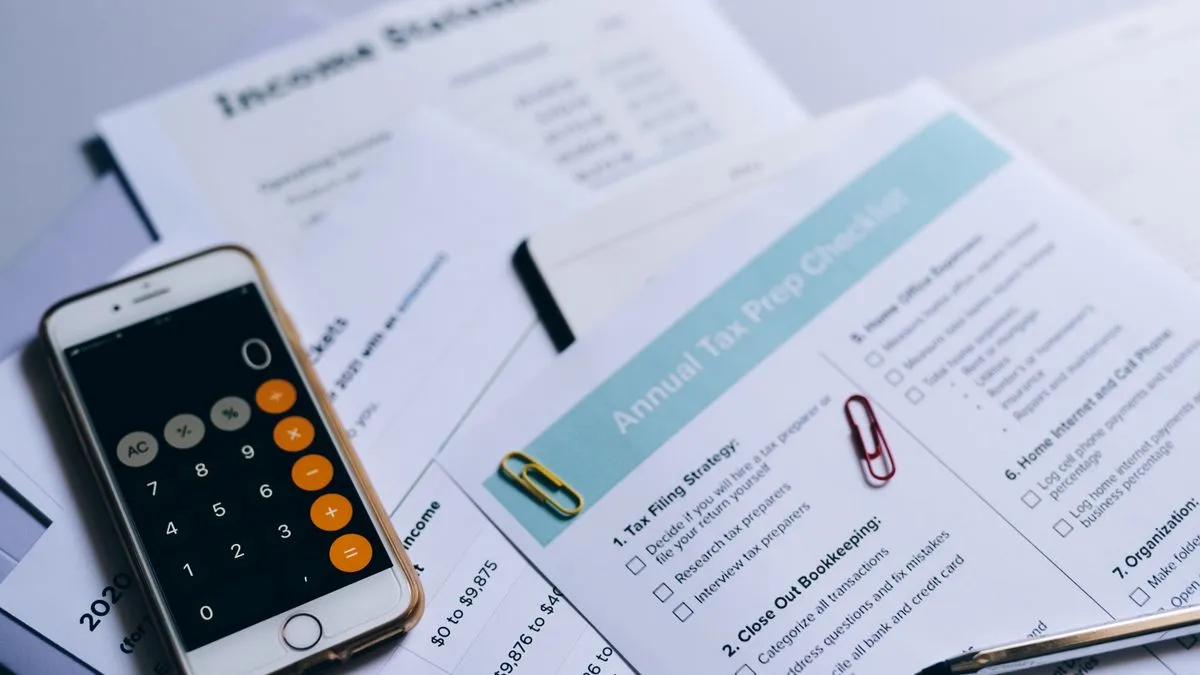
Buy an accumulating ETF through a German broker, hold it for a calendar year, sell nothing and receive nothing in cash, and you can still find tax taken out of your account in January. The mechanism is called the Vorabpauschale, and it surprises people precisely because nothing visible happened. The word is a compound of vorab, meaning in advance, and Pauschale, meaning a flat or notional amount, which is a fair description of the thing itself: it taxes a notional yearly gain on a fund, ahead of you ever selling it.
The gap German law was closing
A distributing fund pays cash into your account. That payment is investment income, the bank sees it arrive, and tax is withheld on the spot. An accumulating fund does none of that. Dividends collected inside the fund are reinvested internally, the share price rises to reflect it, and no money ever crosses the boundary into your account. Left alone, that would mean two people holding the same index through different share classes face wildly different tax timing for no economic reason. One pays every quarter. The other pays nothing for thirty years and then settles up once. The Investmentsteuergesetz, Germany's investment tax law, closes that gap by charging a small notional amount each year on funds that distribute little or nothing, and it applies to ETFs and conventional investment funds alike.
What the charge is calculated on
The starting point is a base rate called the Basiszins, published by the Bundesfinanzministerium and derived from the yield on long-dated German government debt. That rate is applied to the value of your holding at the start of the year, and only a portion of the result is counted. Picture it in words rather than figures: take what your holding was worth on the first day of the year, imagine a cautious safe rate of return applied to it, shave that down by a fixed portion, and you have the ceiling of what can be treated as income. It approximates a modest risk-free gain on the money you had sitting in the fund, not the market's actual one. Anything the fund really paid out to you during the year is then subtracted, because that cash was already taxed when it landed. A distributing fund with a healthy payout therefore often produces no Vorabpauschale at all, while an accumulating fund, which pays out nothing by design, produces the full amount.
A losing year produces nothing
The notional figure is capped by reality. If your fund did not gain value over the calendar year, there is nothing to charge and the Vorabpauschale is zero. If it gained less than the notional amount, the charge is limited to the actual increase. The system will not tax a gain you did not make, which is the most reassuring feature of the rule and the one most people have never heard. The base rate can also switch the whole thing off: in a year where the published rate is not positive, the calculation produces nothing for anybody, whatever their funds did.
When it is taken, and out of which pocket
The notional amount counts as received at the very start of the following calendar year, which is why the entry lands in January rather than in December. Hold the fund in a German Depot and your bank does the entire job: it works out the amount, applies whatever exemption you are entitled to, calculates the tax, and debits it from the Verrechnungskonto, the cash settlement account attached to the Depot. You file nothing and calculate nothing. For most investors the only trace is a small line item, a slightly lower cash balance, and then the Steuerbescheinigung, the annual tax certificate, arriving some months later.
That convenience stops at the border. If your broker sits outside Germany, nobody withholds on your behalf, and a German tax resident has to declare the income themselves in the Anlage KAP of their tax return. The fund figures needed to do it are not always handed to you in a usable form, which is one quiet argument for a German Depot if your affairs are otherwise simple.
The January surprise, and the one-minute fix
Here is where it bites. A disciplined investor who keeps no idle cash, who puts every spare euro to work on payday, has nothing in the settlement account for the bank to take. Banks then behave differently from one another. Some debit a linked current account if you authorised that. Some hold the position and try again. Some report the uncollected amount to the Finanzamt, your local tax office, which picks it up through your tax return instead.
No version of that is a catastrophe. The last one simply converts an invisible automatic deduction into paperwork you did not plan for. Leaving a modest cash cushion in the settlement account over the turn of the year is the whole fix, and it costs you a few weeks of idle money. The time to look at your Depot balance is late December, because by the time a debit fails in January the decision has already been made for you.

You get it back at the other end
This is the part that calms most people down. Every Vorabpauschale already charged on a holding is subtracted from the taxable gain when you eventually sell that holding. The record follows the position, so the same growth is not taxed twice. What the rule moves is the timing, not the total.
Timing is not nothing, though, and it would be dishonest to pretend otherwise. Tax paid in January is money no longer invested, so it stops compounding for you. Take an illustrative holding where the yearly charge is tiny next to the balance: over a couple of decades those small early payments still leave you slightly behind a system that waited until the sale. The drag is real and it is small. Both halves of that sentence matter.
Two things that soften it
Germany gives every investor an annual allowance for investment income, the Sparerpauschbetrag, and it is not applied to you automatically. You switch it on by filing a Freistellungsauftrag, a standing exemption instruction, with each bank where you hold accounts. If your Vorabpauschale fits inside unused allowance, nothing is withheld at all. That is why plenty of smaller portfolios never notice this rule exists.
The second is the Teilfreistellung, a partial exemption that leaves part of the income from certain fund categories out of the calculation, on the reasoning that tax was already paid inside the fund. Equity funds are treated more generously than bond funds. Your bank applies it for you, without being asked.
Why there is not a single number in this article
You may have noticed the absence. It is deliberate. The base rate is republished annually, the allowance has been changed by legislation more than once, and an article that quotes either one ages badly and then quietly misinforms someone. Mechanisms hold their value. Figures do not.
The current base rate is published by the Bundesfinanzministerium. The law itself, the Investmentsteuergesetz, is available in full at gesetze-im-internet.de, and your bank's Steuerbescheinigung shows exactly what was charged on your own account. Rates and allowances change, so confirm the current figure with the official source, your Finanzamt, or a qualified Steuerberater before acting on anything you read here.
What it should change about how you invest
Very little, and that is worth saying plainly, because the internet is full of people treating this as a reason to restructure a portfolio. The Vorabpauschale is not an argument for distributing funds over accumulating ones. It exists specifically so that the share class you pick stops being a tax decision. It is not a penalty, and it is not a reason to sell anything you were otherwise happy to hold.
What it should change is two small habits. Keep a little cash in the settlement account across new year so the debit goes through without a phone call. And when you record what you own in your net worth, remember that part of an accumulating fund's paper gain has already been taxed, so the figure you would truly walk away with sits a little below the number on the screen.
See how a small yearly drag affects a long-term plan
Summary
Germany taxes a notional yearly gain on accumulating funds, so ETF investors pay a little as they go. How the Vorabpauschale works, and what to do.

Written by
Federico RomaldiCo-Founder, Worthmap
Published: August 14, 2026
Federico is a co-founder of Worthmap, a multi-currency net worth tracker with free investing calculators. He writes the site’s articles on value investing, fundamental analysis and tracking wealth held in several currencies. He is not a licensed financial adviser.
Comments
Be the first to comment on this article.
Related Articles
Educational content only. This article is for informational and educational purposes and does not constitute financial, investment, tax, or legal advice. Worthmap is a wealth-tracking and analysis tool, not a registered investment adviser or broker-dealer. Markets carry risk and past performance does not guarantee future results. Always do your own research and consult a qualified financial adviser before making investment decisions.