
TL;DR
The S&P 500 tracks large US companies, the MSCI World spans developed markets across many countries, and the FTSE All-World adds emerging markets on top of developed ones. The wider the index, the more diversified you are, but the more it dilutes any single market that happens to be doing well. There is no single right answer: your choice turns on how much US concentration ("Klumpenrisiko") you are comfortable with, how much home-country bias you want to correct, and what currency your own life and spending are denominated in.
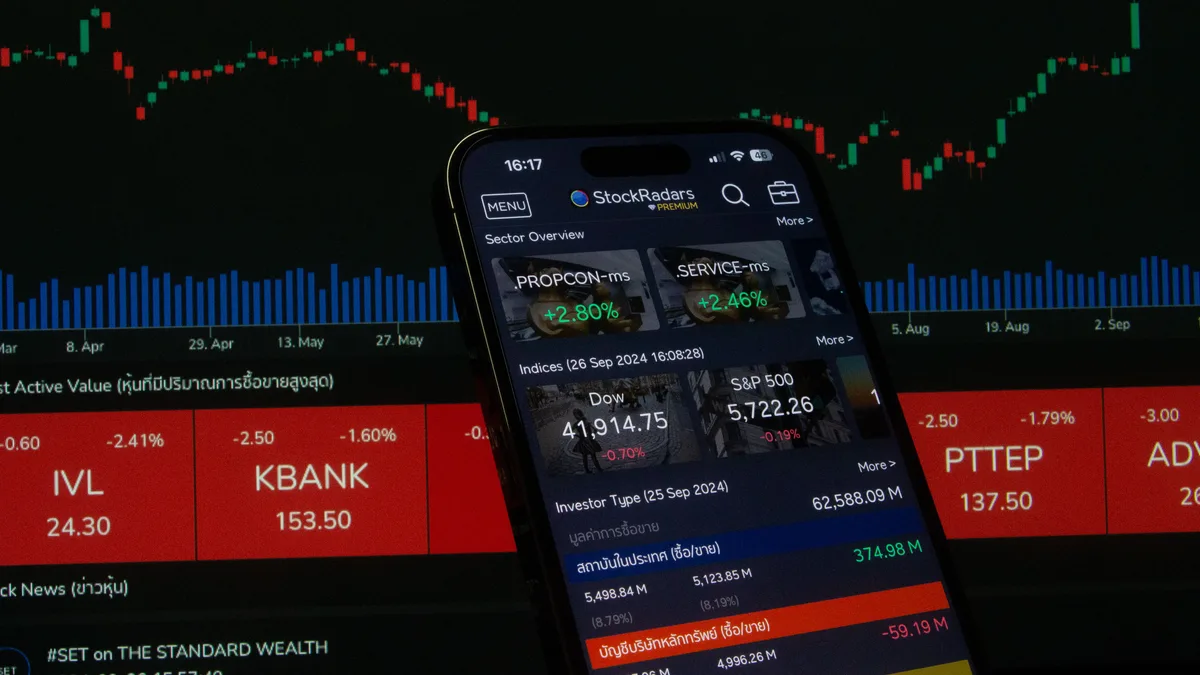
When people say they want to "buy the market", they rarely agree on which market. The S&P 500, the MSCI World and the FTSE All-World are three of the most widely tracked equity indices in the world, and each draws the boundary of "the market" in a different place. You cannot buy an index directly, you buy an index fund or ETF that tracks it, so understanding where those lines fall is the first step in choosing the one that fits how you actually live and invest.
What each index actually holds
The S&P 500 is a measure of large companies listed in the United States. It is narrow by geography but deep within it, capturing a big slice of the US stock market in a single number. Because the US is such a large part of global markets, the S&P 500 is often treated as shorthand for "stocks", but by design it holds nothing outside America.
The MSCI World widens the lens to developed markets across many countries, the United States alongside places such as Japan, the United Kingdom, Germany, France, Canada and others. It is global in the sense of spanning the developed world, yet it deliberately leaves out emerging markets. So it is broader than the S&P 500 by country count, while still excluding a meaningful part of the planet's economic activity.
The FTSE All-World goes a step further again, combining developed markets with emerging ones, adding economies that are growing fast but are classified as less mature. Of the three, it casts the widest net, aiming to represent investable companies across both the developed and the developing world in one index.
The diversification versus concentration trade-off
The core tension between these three is simple to state: the wider the index, the more diversified you are, and the less any single market can dominate your outcome. A US-only index ties your fortunes tightly to one economy; a developed-world index spreads them across many; an all-world index spreads them wider still. Diversification does not promise higher returns, it changes the shape of the risk you carry.

German-speaking investors have a vivid word for the opposite danger: Klumpenrisiko, clump risk, the concentration that builds up when one country, sector or handful of companies quietly comes to dominate a portfolio. Because the US has grown into such a large share of global market value, even a "global" developed-markets index leans heavily American, and a US-only index more so. Spreading across countries is one way to manage that, and it sits inside the broader discipline of asset allocation, deciding how your money is split before you worry about any single holding.
Home-country bias
Most investors instinctively overweight their own country: the companies are familiar, the news is in their language, and the home market feels safer than it really is. This home-country bias can leave a portfolio quietly under-diversified, exposed to the fortunes of a single economy and its currency. Choosing a broader index is one straightforward way to counteract it, though for a US-based investor the S&P 500 already is the home market, which is exactly why the bias is so easy to miss.
Currency exposure for a global investor
For anyone whose salary and spending are not in US dollars, expats, cross-border workers, and investors outside the US generally, the index choice carries a hidden currency dimension. A globally invested portfolio holds companies that earn in many currencies, so its value in your home currency moves with exchange rates as well as with share prices. A wider index spreads that currency exposure across more currencies; a US-only index concentrates it in the dollar. Neither is automatically safer, what matters is how that exposure lines up with the currency your own life is denominated in.
So which one should you track?
There is no single right answer, and anyone who offers you one is selling certainty that does not exist. The honest framing is a set of trade-offs: the S&P 500 gives you concentrated exposure to large US companies; the MSCI World spreads you across the developed world while still leaning American; the FTSE All-World casts the widest net by adding emerging markets. The right choice depends on how much concentration you can live with, how much home-country bias you are trying to correct, and how your currency exposure fits the life you actually lead. Decide your allocation first, then pick the index that expresses it.
Explore the financial tools hub
Summary
MSCI World vs S&P 500 vs FTSE All-World: what each index actually holds, how the diversification and concentration trade-off works, and why currency matters.

Written by
Federico RomaldiCo-Founder, Worthmap
Published: June 21, 2026
Federico is a co-founder of Worthmap, a multi-currency net worth tracker with free investing calculators. He writes the site’s articles on value investing, fundamental analysis and tracking wealth held in several currencies. He is not a licensed financial adviser.
Comments
Be the first to comment on this article.
Educational content only. This article is for informational and educational purposes and does not constitute financial, investment, tax, or legal advice. Worthmap is a wealth-tracking and analysis tool, not a registered investment adviser or broker-dealer. Markets carry risk and past performance does not guarantee future results. Always do your own research and consult a qualified financial adviser before making investment decisions.