
TL;DR
Build a multi-currency asset allocation that manages currency exposure, correlation, and geographic diversification across your global portfolio.
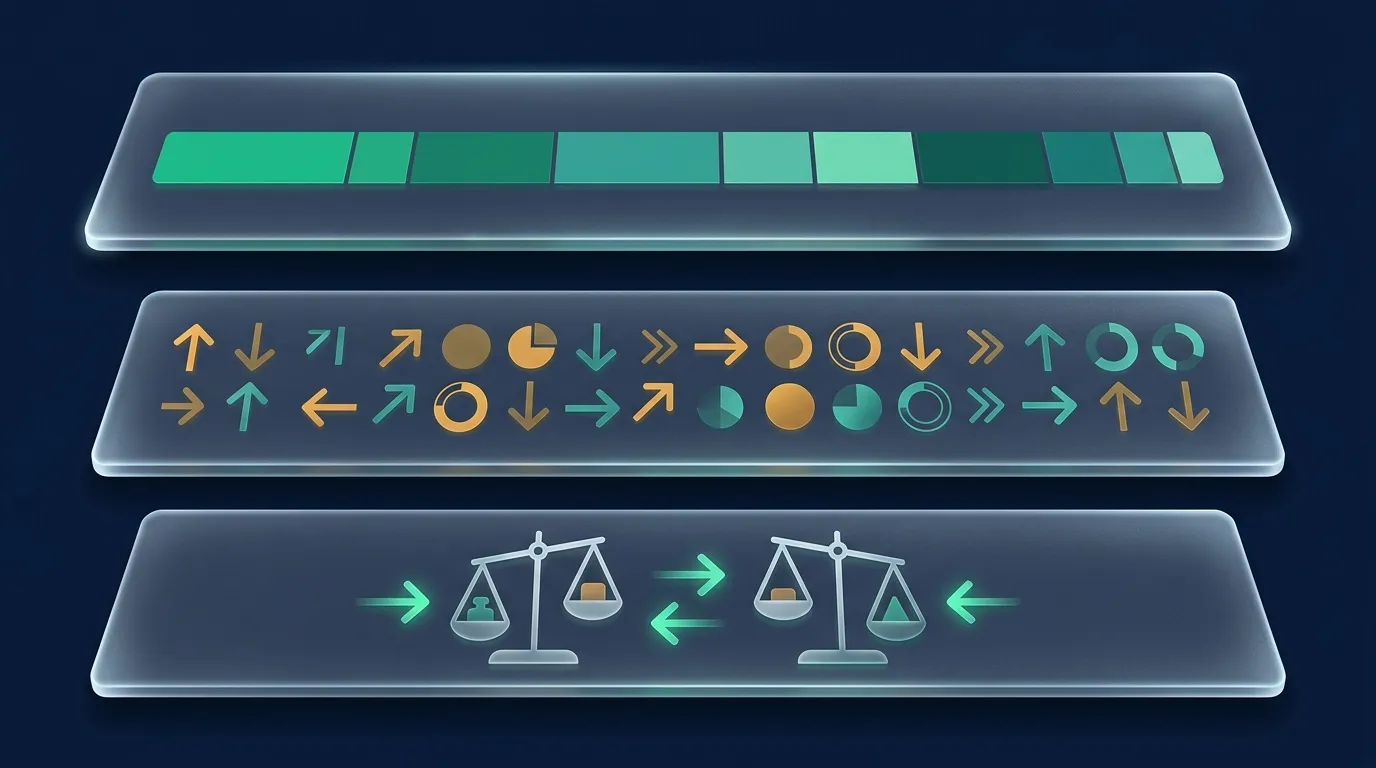
Build a multi-currency asset allocation that manages currency exposure, correlation, and geographic diversification across your global portfolio.
The Hidden Layer Most Portfolios Ignore
Most investment advice assumes you live, earn, spend, and invest in a single currency. Buy diversified index funds, rebalance annually, stay the course. That advice is not wrong, but it is incomplete for anyone whose financial life crosses borders.
The moment you hold assets in more than one currency, a hidden variable enters every investment decision: exchange rate risk. A perfectly allocated portfolio can lose 15% of its value in your home currency in a single year, not because any investment performed badly, but because the currencies moved against you. Equally, currency movements can amplify returns in ways that mask poor stock selection.
This guide covers how to build a multi-currency portfolio with intentional asset allocation, one that treats currency exposure as a deliberate decision rather than an accident of where you happen to buy things.
What Is a Multi-Currency Portfolio?
A multi-currency portfolio is any collection of investments denominated in more than one currency. This includes obvious cases, owning US stocks, European bonds, and Asian real estate, but also less obvious ones: a UK investor holding a global index fund is implicitly exposed to USD, EUR, JPY, and dozens of other currencies through the fund's underlying holdings.
For expats, digital nomads, and international investors, multi-currency exposure is not a choice, it is reality. You might earn in one currency, save in another, own property in a third, and plan to retire in a fourth. The question is not whether to have a multi-currency portfolio. The question is whether to <em>manage</em> it deliberately or let currency effects happen to you randomly.
Layer 1: Strategic Asset Allocation Across Geographies
The first layer is familiar: deciding how to split your portfolio across asset classes (stocks, bonds, real estate, alternatives) and geographies (US, Europe, Asia-Pacific, Emerging Markets). This is the foundation of any portfolio management strategy.
Start With Your Goals and Time Horizon
Asset allocation is not about predicting which market will outperform next year. It is about matching your portfolio to your goals. A 30-year-old building wealth for retirement can tolerate higher equity allocation and greater geographic diversification. A 55-year-old planning to retire in five years needs more stability and should weight toward assets denominated in their future spending currency.
Geographic Diversification: How Much Is Enough?
Home bias, overweighting investments in your own country, is one of the most persistent mistakes in portfolio management. For an American investor, the US represents about 60% of global market capitalization. Holding 90% US stocks is not diversification; it is a concentrated bet on one economy and one currency.
A reasonable starting framework for a global equity portfolio might be: 40-50% developed markets (US, Europe, Japan, Australia), 15-25% in your home market if different, 10-20% emerging markets, and 10-15% in markets where you have specific knowledge or future spending needs. Adjust based on your personal situation, not headlines.
Beyond Stocks: Real Assets and Alternatives
A truly global portfolio extends beyond public equities. Real estate in different countries provides rental income in local currencies. International bonds offer yield diversification. Commodities like gold are priced in USD but serve as a hedge against multiple currencies simultaneously. Each additional asset class adds a new currency dimension to manage.
Layer 2: Currency Exposure Management
This is where most investors fail. They think carefully about which stocks to buy but give zero thought to the currency those stocks are priced in. Currency exposure management means deliberately deciding how much foreign exchange risk your portfolio carries, and whether that risk is aligned with your goals.
Understanding Currency Risk
If you are a European investor holding US stocks: when the dollar strengthens against the euro, your US positions are worth more in euro terms, even if the stocks themselves did not move. When the dollar weakens, your US positions lose value in your home currency regardless of stock performance. Over a decade, currency movements can add or subtract 20-40% from your total returns versus what you would see in the asset's native currency.
The Hedging Decision
There are three approaches to currency risk: (1) Accept it fully, own foreign assets unhedged and let currencies be an additional diversifier. (2) Hedge fully, use currency-hedged funds or derivatives to eliminate FX impact entirely. (3) Hedge selectively, leave equity exposure unhedged (since stocks and currencies are weakly correlated over long periods) but hedge fixed-income exposure (since bond returns are more easily overwhelmed by currency moves).
For most long-term investors with a 10+ year horizon, the research suggests: leave equities unhedged (currency diversification adds value over long periods), hedge international bonds (the small yield advantage disappears if currencies move against you), and match future spending currencies (if you plan to retire in Thailand, having some THB-denominated assets is natural hedging).
Tracking Currency Impact Separately
The critical insight: you cannot manage what you cannot measure. If your portfolio shows +12% annual return but you do not know whether that came from asset appreciation or currency tailwinds, you cannot repeat the success or fix the problem. A proper FX impact analysis separates investment returns from currency effects, showing you what each position earned in its own currency versus what you actually received in yours.
Layer 3: Rebalancing a Multi-Currency Portfolio
Rebalancing a single-currency portfolio is straightforward: sell what has grown above target, buy what has fallen below. But in a multi-currency portfolio, rebalancing becomes a two-dimensional problem. Positions can drift from target allocation either because the asset moved OR because the currency moved, or both simultaneously.
When to Rebalance

Calendar-based rebalancing (quarterly or annually) is the simplest approach but ignores currency dynamics. Threshold-based rebalancing, acting only when an allocation drifts more than 5% from target, is more efficient but requires real-time monitoring of positions in a consistent base currency. For multi-currency portfolios, threshold-based typically outperforms because currency moves can create sudden large drifts that calendar rebalancing misses for months.
Tax Efficiency in Multi-Currency Rebalancing
Selling to rebalance triggers capital gains in most jurisdictions, and for international investors, those gains might be calculated differently depending on whether you use the purchase-date exchange rate or the sale-date rate. Where possible, rebalance by directing new contributions to underweight positions rather than selling overweight ones. This is especially valuable in multi-currency contexts where FX conversion costs add friction.
Practical Frameworks for Different Investor Types
The Expat Investor
You earn in Currency A, live and spend in Currency B, and plan to retire in Currency C (or you are not sure yet). Your priority is flexibility. Keep a meaningful allocation in each currency you might need within 5-10 years. Accept higher currency diversification across equities for the long term. Use your savings rate, not trades, to gradually shift allocation toward your probable retirement currency as that decision becomes clearer.
The Digital Nomad
Your spending currency changes frequently, making traditional currency matching impossible. Focus on building a globally diversified portfolio that does not bet heavily on any single currency. USD-denominated global index funds provide broad exposure. Keep 6-12 months of expenses in cash in your current spending currency, and accept that some FX friction is the cost of location flexibility.
The International Business Owner
Your business generates revenue in multiple currencies, creating natural hedges. Your investment portfolio should complement, not duplicate, those exposures. If your business is heavily USD-dependent, your personal portfolio might deliberately overweight EUR or Asian assets to diversify your total financial picture.
Tools for Managing a Multi-Currency Portfolio
Managing a multi-currency portfolio with spreadsheets is technically possible but practically unsustainable. You need exchange rates updating constantly, historical rate data for performance attribution, the ability to view your total portfolio in any base currency instantly, and clear separation of investment returns from currency effects.
This is exactly the problem a dedicated multi-currency portfolio tracker solves. Unlike single-currency tools that simply convert everything at today's rate, a proper global investment tracker maintains the full history: what you paid in the original currency, what the asset is worth today in its native currency, and what that means in your chosen reporting currency, with the FX impact isolated so you can see exactly what is driving your returns.
Try the Currency Exposure Calculator
Explore the FX Impact Calculator
Use the Portfolio Rebalancing Tool
Common Mistakes in Multi-Currency Portfolio Building
Ignoring Currency Exposure Entirely
The most common mistake. Investors select assets based on fundamental quality or expected returns but never consider the currency those assets are priced in. Result: unintentional, unmanaged bets on currencies they may not even realize they hold.
Over-Hedging Everything
The opposite extreme. Hedging all currency exposure eliminates a genuine source of diversification and incurs ongoing costs (hedging is not free). For long-term equity investors, academic research consistently shows that unhedged international equities provide slightly better risk-adjusted returns over periods exceeding 10 years.
Confusing Nominal Returns with Real Returns
A 10% return in Turkish lira sounds impressive until you realize the lira depreciated 25% against your home currency. Always evaluate international investment returns in your own base currency to understand actual purchasing power impact.
Ignoring Correlation Between Assets and Currencies
Some currencies and assets move together. Australian stocks and the Australian dollar both tend to rise when commodity prices rise. This means holding Australian equities as a non-AUD investor provides concentrated commodity exposure with currency amplification, which might be desirable or dangerous depending on your total portfolio context.
Building Your Multi-Currency Portfolio: A Step-by-Step Summary
First, define your base currency, the currency in which you measure total wealth and evaluate performance. Second, decide your strategic asset allocation across geographies and asset classes. Third, map the resulting currency exposures and decide which to accept, which to hedge, and which to actively increase. Fourth, set up monitoring that shows performance in your base currency with FX impact isolated. Fifth, rebalance when allocations drift beyond your threshold, considering both asset and currency drift.
The difference between a random international portfolio and a deliberate multi-currency strategy is not the assets you hold, it is whether you understand and manage the currency layer on top. Get that right, and geographic diversification becomes the powerful return-smoother it is supposed to be. Get it wrong, and you might hold thirty different investments across ten countries while still making an unintentional concentrated bet on a single currency.
Worthmap is the portfolio tracker built for investors who hold assets across currencies and continents. In a free account at my.worthmap.com you record every position in its own currency and see the total in the base currency you pick, and the free FX impact calculator on the site separates FX impact from investment returns. Start free today.
Create free accountSummary
Build a multi-currency asset allocation that manages currency exposure, correlation, and geographic diversification across your global portfolio.

Written by
Federico RomaldiCo-Founder, Worthmap
Published: May 9, 2026 · Last updated: May 12, 2026
Federico is a co-founder of Worthmap, a multi-currency net worth tracker with free investing calculators. He writes the site’s articles on value investing, fundamental analysis and tracking wealth held in several currencies. He is not a licensed financial adviser.
Comments
Be the first to comment on this article.
Related Articles
Educational content only. This article is for informational and educational purposes and does not constitute financial, investment, tax, or legal advice. Worthmap is a wealth-tracking and analysis tool, not a registered investment adviser or broker-dealer. Markets carry risk and past performance does not guarantee future results. Always do your own research and consult a qualified financial adviser before making investment decisions.