
TL;DR
You can get gold exposure three main ways: physical bullion and coins (real metal you must store and insure), gold ETFs or ETCs (simple, low-cost exposure that trades like a share), and gold mining stocks (equity in the companies that dig it up, offering operating leverage but also company-specific risk). Gold pays no income and its long-term real return is debated, so most investors treat it as a small diversifier and potential inflation or currency hedge rather than a core holding, typically a modest slice of a portfolio, not the centre of it.
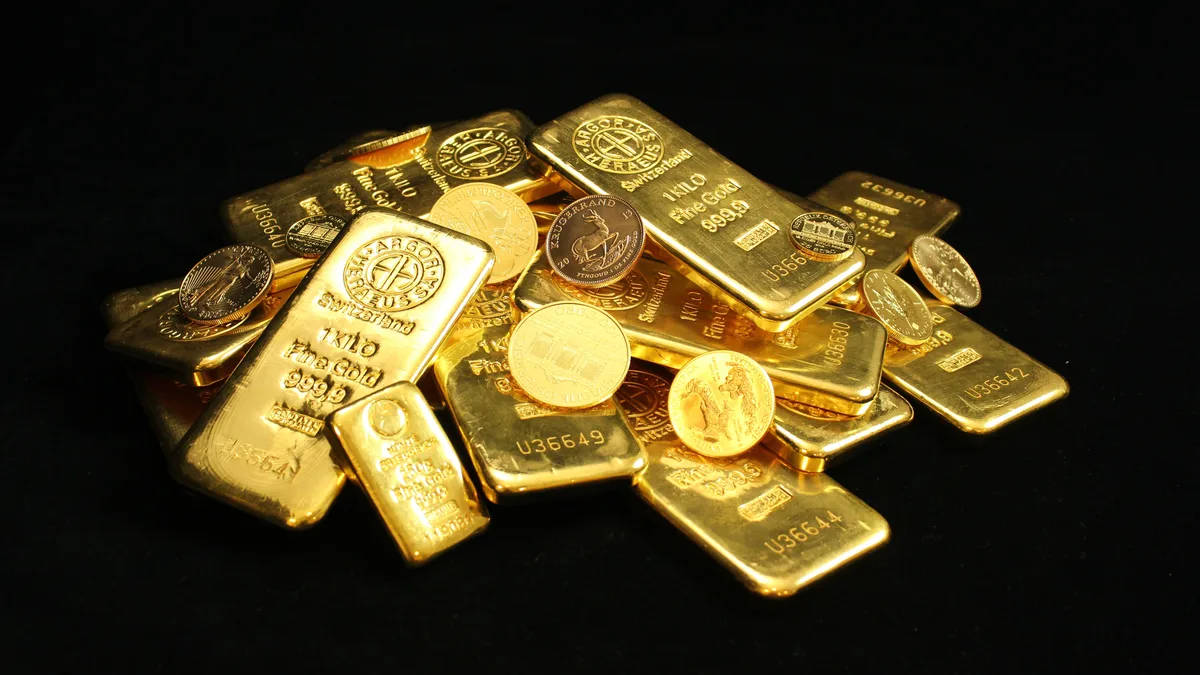
Gold has been a store of value for thousands of years, and it still draws investors looking for something that behaves differently from stocks and bonds. But there is no single way to invest in gold, there are several. You can hold the physical metal, buy a fund that tracks its price, or own shares in the companies that mine it. Each route comes with its own costs, risks, and quirks, and choosing well starts with understanding what you are actually buying.
Physical bullion and coins
The most direct way to own gold is to buy the metal itself, bars, ingots, or coins. There is a tangible appeal to holding real bullion: it carries no counterparty risk, cannot be diluted or defaulted on, and is recognised almost everywhere. For investors who value gold precisely because it sits outside the financial system, physical metal is the purest expression of that idea.
The trade-offs are practical. Physical gold has to be stored somewhere secure and insured against theft or loss, and both cost money year after year. You typically pay a premium over the spot price when you buy and accept a slightly lower price when you sell, so the round trip carries friction. Verifying purity and provenance matters, and large holdings can be awkward to move or divide. None of this makes physical gold a bad choice, but it does make it the highest-maintenance one.
Gold ETFs and ETCs
If you want gold exposure without a safe in the wall, an exchange-traded fund or exchange-traded commodity is the simplest route. These products aim to track the gold price closely, and many of the larger ones are backed by allocated physical bullion held in a vault on investors’ behalf. You buy and sell them through an ordinary brokerage account, just like a share, with tight spreads and instant liquidity.
The cost is an ongoing management fee, charged as a small annual percentage, which gradually erodes returns over long holding periods. You also take on the structure’s counterparty and custody arrangements rather than holding the metal yourself, so it pays to understand whether a product is physically backed or uses derivatives to track the price. For most investors, though, an ETF or ETC delivers clean, low-friction gold exposure with none of the storage headaches.
Gold mining stocks
Buying shares in gold miners is a different proposition entirely. You are no longer buying gold, you are buying a business whose profits depend on the gold price but also on management, costs, debt, geology, and politics. Because a miner’s costs are relatively fixed, a rise in the gold price can lift profits more than proportionally, giving mining shares a kind of built-in leverage to the metal. Some miners also pay dividends, which physical gold and most funds never do.
That leverage cuts both ways. A falling gold price can squeeze a miner’s margins hard, and the shares carry every risk that comes with running a company: a flooded mine, a bad acquisition, a political dispute in a producing country, or simple operational missteps can hurt the stock even when gold itself is steady. Mining shares can be a powerful way to amplify a gold view, but they are not a substitute for gold, and they behave far more like equities than like the metal.
Gold’s role, and the debate around it
Gold’s appeal in a portfolio rests on diversification. It has often moved differently from stocks and bonds, particularly during periods of stress, currency weakness, or rising inflation, which can soften the swings of a portfolio overall. As a store of value that no government can print, it is also widely seen as a hedge against the erosion of paper currencies over the very long run.
The counter-argument is just as important. Gold pays no interest, no dividend, and no rent, its only return comes from someone else paying more for it later, which makes its long-term real return a genuine subject of debate. It can go through long stretches of flat or falling prices, and its reputation as a reliable short-term inflation hedge is more mixed than the headlines suggest. Honest investors hold gold with both the case and the caveats in view.
Because of that, gold usually works best as a modest, deliberate slice of a wider plan rather than a core holding, a question of asset allocation and the kind of currency exposure you want to balance, not a bet to size large.
So which route fits you? Physical metal suits investors who want gold outside the financial system and accept the storage burden. ETFs or ETCs suit those who want simple, cheap, liquid exposure to the price. Mining stocks suit investors who actively want company risk and leverage to gold, and who understand they are buying equities. Many investors who hold gold at all keep it deliberately small, enough to diversify, not enough to dominate.
Explore the financial tools hub
Summary
Three ways to invest in gold: physical bullion you store and insure, gold ETFs and ETCs that trade like a share, and gold mining stocks that add leverage.

Written by
Federico RomaldiCo-Founder, Worthmap
Published: June 21, 2026
Federico is a co-founder of Worthmap, a multi-currency net worth tracker with free investing calculators. He writes the site’s articles on value investing, fundamental analysis and tracking wealth held in several currencies. He is not a licensed financial adviser.
Comments
Be the first to comment on this article.
Educational content only. This article is for informational and educational purposes and does not constitute financial, investment, tax, or legal advice. Worthmap is a wealth-tracking and analysis tool, not a registered investment adviser or broker-dealer. Markets carry risk and past performance does not guarantee future results. Always do your own research and consult a qualified financial adviser before making investment decisions.