
TL;DR
A savings plan is one standing instruction to your broker: on a fixed day each month, take this amount and buy this fund. You choose the rate, the interval, the fund, and whether it reinvests dividends or pays them out, and the plan then runs without asking your opinion. That is the point of it. Set a rate you could still pay in a bad month, check what each execution costs you, and remember that pausing or cancelling a plan is not the same thing as selling what you already own. A plan does not remove market risk. It removes the monthly decision, which is the part most people get wrong.

An ETF savings plan is one standing instruction: on the same date every month, take this amount out of my bank account and buy this fund with it. Germans call it an ETF-Sparplan, Italians call it a PAC, and in India the same idea is sold as an SIP. The label changes, the machinery does not: an automatic investment plan works the same way under any of those names. What follows is what that instruction actually does once it is running, what you are really choosing when you fill in the form, and what to do when your income or your plans change.
What actually happens on the day the plan runs
On the execution day the broker pulls the money, usually by direct debit under the SEPA scheme if your account is in the euro area, and places an order for the fund. You do not choose the price. Your order is normally bundled with every other plan running that day and sent to the market in one go, which is exactly why the fee per execution can be so small. If your chosen date lands on a weekend or a public holiday, the plan runs on the next trading day instead. Nothing gets skipped.
Two things catch people out at the start. The cash leaves the bank account before the units appear in the portfolio, so there is a short window where the money looks like it has gone nowhere. And the price you get is simply whatever the price happened to be that day. A savings plan is not a limit order. If you want to buy at a level you have picked yourself, this is the wrong tool, and that is a feature rather than a flaw: picking levels is the job the plan was built to take away from you.
The automation is the point, not the fund
The hard part of investing is rarely picking the index. It is still buying in the month the headlines are ugly, when skipping one transfer feels sensible and costs nothing today. Skip it once and the next one is easier to skip. A standing order takes that monthly decision off your desk entirely. You made the decision once, on a calm evening with a coffee, and the bank keeps carrying it out while you think about other things. The plan is not smarter than you are. It is just more consistent than you are on a bad week.
Choosing an amount you can actually keep paying
The right monthly rate is the one that survives a bad month. A modest amount you can hold for ten years beats a heroic amount you cancel in March, because the plan only works if it keeps running. Before you type a figure into the form, ask what happens to it if your income drops for two months, or the car needs work. If the honest answer is that the plan would be the first thing you cut, set it lower now and make a manual purchase in the months you have something spare.
There is another reason not to agonise over the exact figure. Early on, the balance is almost entirely your own contributions, because growth needs a balance to grow on and in year one there barely is one. Later that flips, and the market moves your balance more in a week than your monthly payment does. That is compound interest doing its work, and it is why the number of years you keep the plan alive usually matters more than getting the rate perfect on day one. You can raise it later. You cannot get the years back.
Choosing the fund, and choosing what it does with dividends
Whatever you pick, the plan buys it every month without asking for a second opinion, so pick something you would be willing to own through a bad decade. Broad index funds are the common choice here for a practical reason: a narrow single-country or single-sector fund invites you to have views, and having views is what breaks plans. Match the ISIN rather than the name, because one index often sits behind several funds and several share classes with almost identical titles. Read the Key Information Document that EU rules require for retail investors before the first execution, not after. If funds like this are new to you, start with what an index fund actually is.
One more switch sits on the same form, and it decides what happens to the dividends the underlying companies pay. An accumulating share class reinvests them inside the fund, so nothing lands in your account and the unit price absorbs them quietly. A distributing class pays the cash out to you, and then you have to decide what to do with it. Neither is automatically better; the answer depends on your tax situation and on whether you want income now. The trade-off is written up in full in accumulating versus distributing ETFs.
Partial units are what make a small monthly rate work
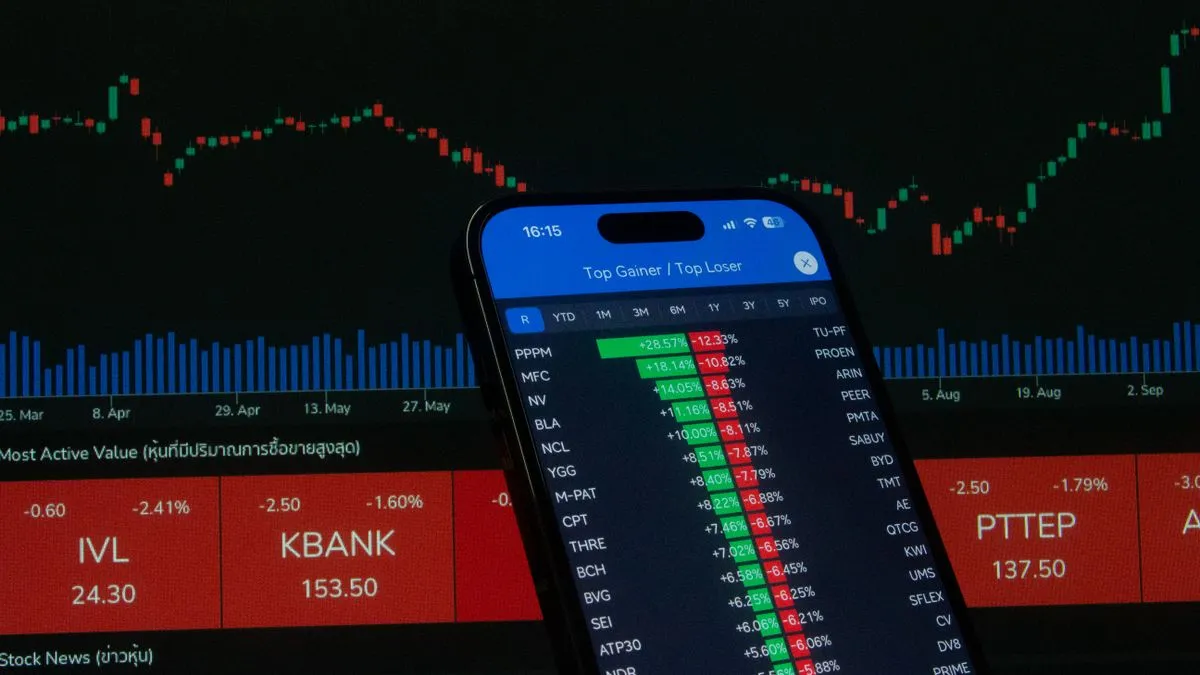
A single unit of a broad ETF can easily cost more than somebody's entire monthly rate. Savings plans get around that by buying fractions: your payment buys whatever slice of a unit it buys, and the slices add up month after month. This is the reason a plan works at a small amount while placing the same order by hand would leave cash sitting idle every month, waiting to reach the price of one whole unit. The side effect is that your holding will show an odd, uneven number forever. That is normal and it changes nothing.
Ten years of small payments, as an illustration
Take deliberately round numbers as an illustration only. Put 200 a month into a plan, keep it running for ten years, and you will have handed over 24,000 of your own money in 120 separate payments, without once deciding when. What the balance is at the end depends entirely on what markets did over those ten years, and nobody can tell you that in advance. The split is still worth seeing clearly: anything above 24,000 came from growth, anything below it is a loss you have not realised yet, and the 24,000 itself is the only part that was ever under your control.
Those 120 purchases also happen at 120 different prices, which is the averaging effect people mean by dollar cost averaging. Be clear about what it buys you. It spreads your entry price across many days and it removes the timing decision. It does not promise a better outcome than putting the same money in some other way, and it is not really the reason to run a plan. The reason to run a plan is that it runs.
The costs that bite hardest at small amounts
Two costs sit on a savings plan and they behave differently. The first is what the provider charges per execution, and if that charge is a flat amount it takes a far bigger bite out of a small monthly rate than a large one, easily outweighing a small difference in the fund's ongoing charge. The second is that ongoing charge itself, deducted inside the fund and shown in the Key Information Document, which you never see leave your account. Watch the expiry date on any free-plan promotion, because those offers run for a set period and the fee comes back when it ends. And if the fund holds assets priced in currencies you do not spend, exchange rates move your return too. That is currency exposure rather than a fee, but it is just as real.
Pausing or raising a plan is not the same as selling
Changing a plan is an edit to a standing instruction, not a transaction. If money is tight, pausing it or lowering the rate stops the next purchase and touches nothing you already own; the units you hold stay invested and keep doing whatever the market does. Cancelling the plan is not selling either. Those live in two different places in the account, and confusing them is the most common panic on a bad day. Cancel a plan in a falling market and all you have done is stop buying, which is precisely the opposite of what you set it up for.
Raising the rate is the move people forget. A figure that felt comfortable three years ago is quietly shrinking against your salary and against prices, so the useful habit is to look at it once a year on a date you chose in advance, rather than on a date the market chooses for you. Some providers will increase the rate automatically by a set percentage each year if you switch that on. If yours does not offer it, a calendar reminder does the same job for free.
What a savings plan does not do
A plan does not remove market risk. It removes the decision. Run one into a long falling market and the balance falls too, on schedule, month after month, and the only real consolation is that each payment buys more units than the one before it. A plan is also not a substitute for cash you can reach quickly. If a broken boiler forces you to sell units in a bad month, the plan has quietly become your emergency fund, which is the exact situation it should be protecting you from. Keep the buffer separate and in cash.
So the setup is short. Pick a rate you could still pay in your worst month, pick a fund broad enough that you will not want opinions about it, check the ISIN and what each execution costs, and put one date in the calendar a year from now to look at the rate again. Then leave it alone. The plan's only real advantage over you is that it will not change its mind in February, and the whole point of setting it up is to hand it that advantage.
See what a monthly rate adds up to with the SIP calculator
Summary
An ETF savings plan turns investing into a standing monthly order. Here is what you really choose when you set one up, and how to pause, raise or stop it later.

Written by
Federico RomaldiCo-Founder, Worthmap
Published: August 14, 2026
Federico is a co-founder of Worthmap, a multi-currency net worth tracker with free investing calculators. He writes the site’s articles on value investing, fundamental analysis and tracking wealth held in several currencies. He is not a licensed financial adviser.
Comments
Be the first to comment on this article.
Related Articles
Educational content only. This article is for informational and educational purposes and does not constitute financial, investment, tax, or legal advice. Worthmap is a wealth-tracking and analysis tool, not a registered investment adviser or broker-dealer. Markets carry risk and past performance does not guarantee future results. Always do your own research and consult a qualified financial adviser before making investment decisions.