
TL;DR
Currency risk is the chance that exchange-rate movements change the value of your investments once converted back into the currency you spend. A foreign stock can rise in its local currency yet leave you with a loss at home if that currency weakens against yours. Your total return has two layers, the asset's performance and the currency move, and either can dominate. Track returns in your base currency, hold some assets in the currency you will spend, and diversify across currencies so no single move dominates.
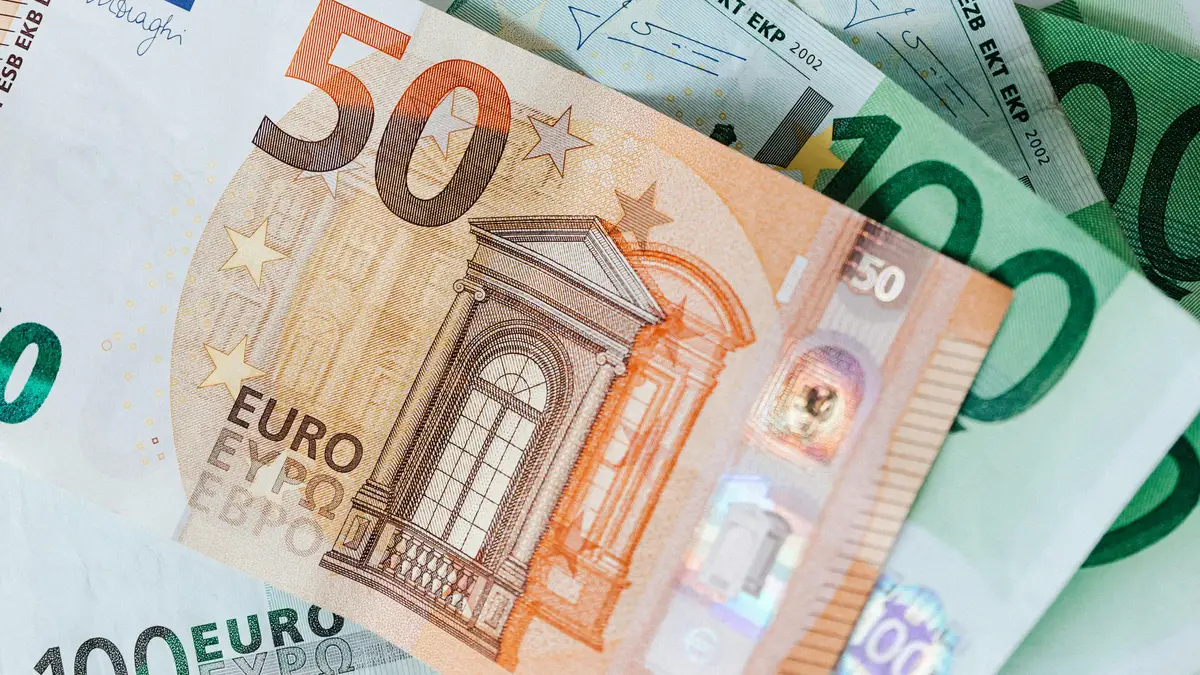
Currency risk is the chance that exchange-rate movements change the value of your investments once converted back into the currency you spend. A foreign stock can rise in its local currency yet leave you with a loss at home if that currency weakens against yours. For expats and global investors, currency can matter as much as the investment itself.
The point is easy to miss because the headline numbers you see are quoted in the asset's own currency. A US fund reports its return in dollars, a Japanese stock in yen, a UK trust in pounds. If you spend euros, none of those figures is your real return, they all pass through an exchange rate before they reach your wallet, and that rate is moving every day whether you watch it or not.
The two layers of return
When you own a foreign asset, your total return has two parts: the asset's performance in its local currency, and the change in the exchange rate. Either can dominate. A great stock pick can be undone by an adverse currency move, and a mediocre one can be flattered by a favourable one.
The two layers are roughly multiplicative: your home-currency return is the local return combined with the currency return, not just added on top. Over short periods the currency layer is mostly noise, but over years it can swing a position by tens of percent, which is why a value investor with a long horizon cannot treat it as a rounding error.
Worked example. A euro investor buys a US stock at $100; it rises to $120 (+20% in dollars). But the euro strengthens so the rate moves from 1.10 to 1.25 dollars per euro. In euros the position goes from €90.91 to €96.00, a real gain of about 5.6%, not 20%.

The arithmetic is worth seeing in full: at the start, $100 ÷ 1.10 = €90.91; at the end, $120 ÷ 1.25 = €96.00. The stock did its job, up 20% in dollars, but a stronger euro meant each dollar bought fewer euros on the way home, and roughly three-quarters of the local gain evaporated in translation. Reverse the move, a weakening euro, and the same dollar gain would have looked far larger in euros than 20%.
How to manage it
You cannot forecast exchange rates reliably, so the goal is not to bet on currencies but to stop them from quietly dictating your outcome. Three habits do most of the work: hold some assets in the currency you will eventually spend, so your future bills are matched by assets that move with them; diversify across currencies so no single move dominates your whole portfolio; and track returns in your home, or base, currency to see the true result rather than the flattering local-currency headline.
Whether to hedge currency exposure outright is a separate decision with its own costs, and for a long-term diversified investor the case for hedging every position is weak. What matters most is simply seeing the currency layer clearly, measuring it, not ignoring it. You can put real numbers on it with our FX impact calculator, and the underlying ideas are defined in our glossary entries on currency exposure and the exchange rate.
Putting it into practice
Currency risk is not a reason to avoid foreign assets, diversifying across markets is one of the strongest things a long-term investor can do. It is a reason to measure your returns honestly, in the currency you actually spend. The next step is to consolidate everything you own into one base currency so you can see your real net worth and real returns at a glance, which we cover in how to track your investments across currencies and how to calculate your net worth. When you want to size the currency effect on a specific position, the calculator does the conversion for you.
Open the FX impact calculator
Summary
Currency moves can turn an investment gain into a loss once converted to your home currency. Learn how currency risk works and how to manage it.

Written by
Federico RomaldiCo-Founder, Worthmap
Published: June 6, 2026
Federico is a co-founder of Worthmap, a multi-currency net worth tracker with free investing calculators. He writes the site’s articles on value investing, fundamental analysis and tracking wealth held in several currencies. He is not a licensed financial adviser.
Comments
Be the first to comment on this article.
Related Articles
Educational content only. This article is for informational and educational purposes and does not constitute financial, investment, tax, or legal advice. Worthmap is a wealth-tracking and analysis tool, not a registered investment adviser or broker-dealer. Markets carry risk and past performance does not guarantee future results. Always do your own research and consult a qualified financial adviser before making investment decisions.