
Calcolatore del valore attuale
Scopri quanto vale oggi il denaro che riceverai in futuro
Inserisci l'importo e il tasso
Gratis · Senza registrazione · Si aggiorna mentre digiti
€
Il singolo pagamento futuro, es. 100.000.
Quanto potrebbe rendere questo denaro altrove, es. 8 per l'8%. In finanza si chiama tasso di sconto.
Quanto è lontano nel futuro, in anni, es. 10. Fino a 100.
Quanto valgono oggi 100.000 € che riceverai tra 10 anni
46.319 €
Se il tuo denaro potesse invece avere un rendimento di 8% all'anno, 100.000 € che arrivano tra 10 anni valgono 46.319 € oggi (è il loro valore attuale). Detto al contrario, 46.319 € messi da parte oggi con un rendimento di 8% all'anno diventerebbero 100.000 € per quella data. Quindi, con quel rendimento, avere in mano oggi più di 46.319 € conviene rispetto ad aspettare, avere meno di 46.319 € no.
I numeri dietro questo risultato
La differenza
Quanto renderebbero 46.319 € in 10 anni con un rendimento di 8% all'anno. Non è una commissione e non la prende nessuno: è il motivo per cui la somma che arriva più tardi deve essere più grande.
53.681 €
Che cosa lo cambia di più
Clicca su una riga per andare al campo che cambieresti.
Il calcolo usa solo le tre cifre qui sopra. Non tiene conto delle tasse né dell'aumento dei prezzi, e considera certo il pagamento futuro.
Come cambia il valore al variare del rendimento che potresti ottenere
Il rendimento che potresti ottenere altrimenti è una stima, e la risposta cambia molto al suo variare. Ecco lo stesso denaro futuro valutato con una gamma di rendimenti.
| Rendimento annuo che potresti avere | Valore oggi |
|---|---|
| 4% | 67.556 € |
| 6% | 55.839 € |
| 8% (il tuo) | 46.319 € |
| 10% | 38.554 € |
| 12% | 32.197 € |
Spunto: Il valore attuale è la base di quasi ogni valutazione d'investimento. Più alto è il tasso di sconto, o più lunga è l'attesa, meno vale oggi una somma futura. Quando confronti due opzioni che pagano in momenti diversi, portarle entrambe al valore attuale le mette sullo stesso piano.
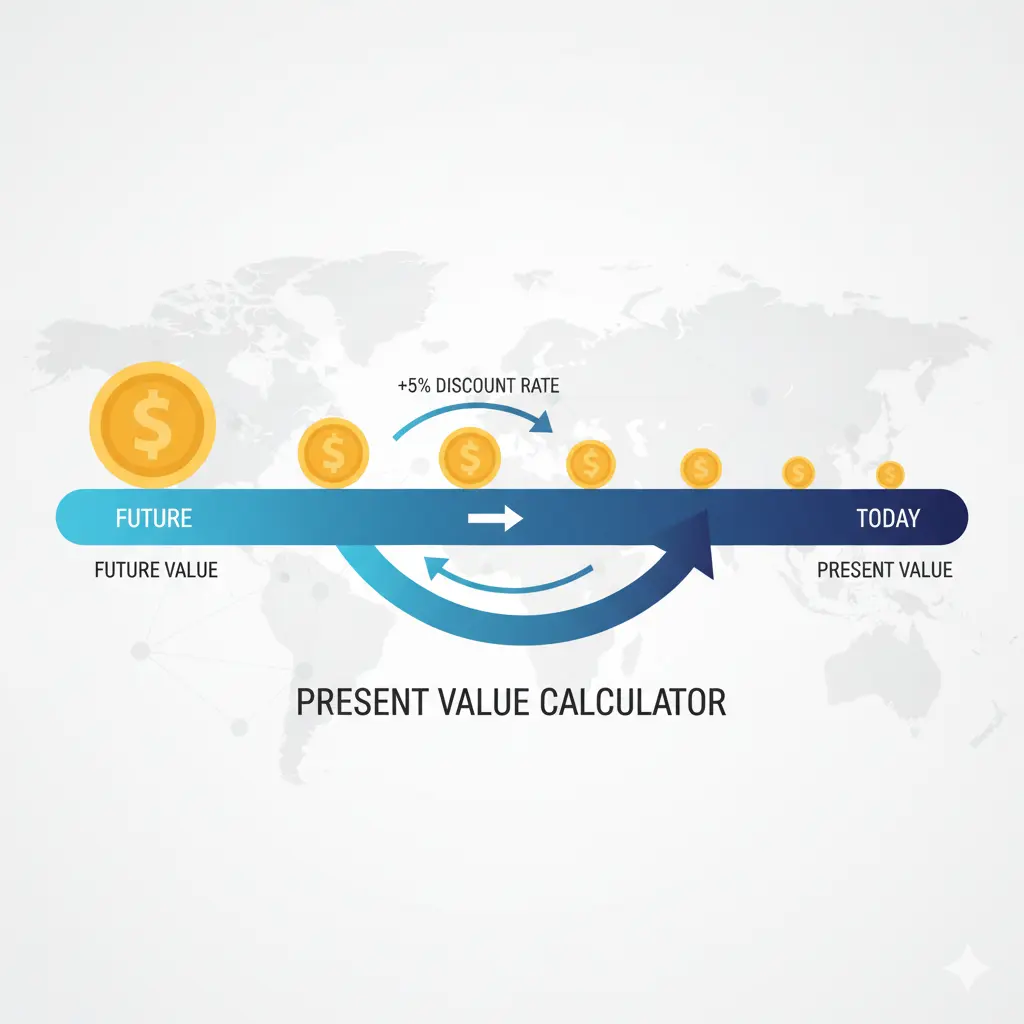
Il valore attuale è il cardine del valore temporale del denaro. Un euro oggi vale più di un euro domani, perché l'euro che hai adesso puoi investirlo e fargli rendere qualcosa. Questo calcolatore attualizza i flussi di cassa futuri al loro valore equivalente di oggi.
PV = FV / (1 + r)^n
Passo 1: Scegli se stai valutando una sola somma futura o una serie di pagamenti ricorrenti (una rendita).
Passo 2: Inserisci la somma che riceverai (o l'importo di ogni pagamento), il rendimento annuo che potresti ottenere altrimenti e il numero di anni.
Passo 3: Per i pagamenti ricorrenti, scegli ogni quanto vieni pagato: una volta all'anno, ogni sei mesi, ogni trimestre o ogni mese. Una somma futura unica viene attualizzata una volta all'anno.
Passo 4: Quanto vale oggi quel denaro, la differenza e una tabella con altri rendimenti compaiono mentre digiti, senza premere alcun pulsante.
Che cos'è il valore attuale?
Il valore attuale risponde a una domanda semplice ma potente: quanto vale adesso una somma di denaro futura? Si fonda sul valore temporale del denaro, l'idea che un euro oggi valga più di un euro domani, perché l'euro che hai adesso puoi investirlo e fargli rendere qualcosa. Per confrontare somme che arrivano in momenti diversi, devi prima riportarle tutte allo stesso istante: oggi.
Quest'idea attraversa quasi tutta la finanza. Serve a prezzare le obbligazioni, a valutare i flussi di cassa di un'azienda, a confrontare una somma unica con un piano a rate e a decidere se un incasso futuro vale più del denaro che hai in mano oggi. Ogni volta che conta il momento in cui arriva un flusso di cassa, il valore attuale è lo strumento che mette tutto sullo stesso piano.
La formula del valore attuale
PV = FV / (1 + r)^n
Per una sola somma futura, il valore attuale divide la somma futura per uno più il tasso annuo, elevato al numero di anni. Questo calcolatore attualizza una somma unica una volta all'anno. Più lunga è l'attesa e più alto è il tasso, più piccolo è il valore attuale.
Per una rendita, cioè una serie di pagamenti uguali a intervalli regolari, il valore attuale somma il valore attualizzato di ogni singolo pagamento. Invece di attualizzare ogni pagamento separatamente, la formula si semplifica in PV = PMT × [(1 − (1 + i)^−N) / i], dove PMT è un pagamento, i è il tasso annuo diviso per il numero di pagamenti in un anno e N è il numero di pagamenti. Ogni pagamento è contato alla fine del suo intervallo. È quello che usa il calcolatore nella modalità a pagamenti ricorrenti.
Un esempio pratico
Supponiamo che qualcuno ti offra di pagarti 100.000 $ tra dieci anni. Se il tuo denaro potesse rendere altrimenti l'8% all'anno, il valore attuale è 100.000 ÷ (1,08)^10, che dà circa 46.319 $. In altre parole, ti basterebbe mettere da parte oggi più o meno 46.319 $, che crescono all'8%, per ritrovarti con 100.000 $ tra un decennio. La differenza, circa 53.681 $, è quanto renderebbero quei 46.319 $ nei dieci anni.
Prendiamo ora il caso dei pagamenti ricorrenti: 1.000 $ all'anno per dieci anni allo stesso tasso dell'8%. Sulla carta i pagamenti fanno 10.000 $, ma il loro valore attuale è solo di circa 6.710 $, perché ogni pagamento successivo vale meno del precedente. I primi 1.000 $ hanno appena bisogno di essere attualizzati; l'ultimo è attualizzato per un intero decennio. Ecco perché un flusso di entrate future vale sempre meno dello stesso totale ricevuto oggi.
Come si usa il valore attuale negli investimenti
La determinazione del prezzo delle obbligazioni è uno degli usi più diretti. Il prezzo equo di un'obbligazione è semplicemente il valore attuale delle sue cedole future più il valore attuale del valore nominale restituito alla scadenza. È anche il motivo per cui i prezzi delle obbligazioni scendono quando i tassi d'interesse salgono: un tasso di sconto più alto abbassa il valore attuale di ogni pagamento futuro che l'obbligazione effettuerà.
Nella valutazione delle azioni, il modello del discounted cash flow stima il valore di un'azienda come valore attuale dei suoi flussi di cassa liberi futuri previsti. Il valore attuale risolve anche le scelte di tutti i giorni: decidere tra 100.000 $ oggi e 150.000 $ tra cinque anni, oppure tra una pensione in un'unica soluzione e una rendita mensile, si riduce ad attualizzare ogni opzione a un tasso realistico e a confrontare i risultati.
A cosa fare attenzione
Il risultato vale solo quanto il tasso di sconto che scegli, e quel tasso è un giudizio, non un fatto. Una piccola variazione può spostare il valore attuale in modo notevole, soprattutto sugli orizzonti lunghi: è proprio per questo che il calcolatore mostra una tabella di sensibilità su una gamma di tassi. Tratta il valore attuale come una stima ragionata, non come una cifra precisa, e verifica sempre come regge il risultato se le tue ipotesi si rivelassero un po' troppo ottimistiche.
Usare il valore attuale insieme ad altri strumenti
Il valore attuale è il motore dietro diversi altri strumenti. Per sommare i valori attuali dei flussi di cassa di un investimento e sottrarne il costo iniziale, usa il nostro calcolatore NPV e per trasformare i flussi di cassa previsti di un'azienda in un valore per azione, usa il calcolatore DCF.
Il tasso di sconto che inserisci conta più di ogni altro dato. Per stimare un tasso realistico a partire dal mix di debito e capitale proprio di un'azienda, calcolalo con il nostro calcolatore WACC prima di attualizzare qualsiasi flusso di cassa a oggi.
Domande frequenti
Il tasso di sconto è il rendimento che potresti ottenere altrove su denaro con un rischio simile, quindi dipende da che cosa stai confrontando. Per un riferimento quasi privo di rischio, usa il rendimento attuale di un titolo di Stato che dura più o meno quanto la tua attesa. Per giudicare un'azienda o un investimento, usa il rendimento che pretendi, oppure il suo costo medio ponderato del capitale (WACC). Se ti interessa solo tenere il passo con i prezzi, usa l'inflazione che ti aspetti. Il valore attuale è molto sensibile a questa cifra, quindi conviene provare una gamma di valori invece di fidarsi di un solo numero.
Il valore attuale (PV) attualizza a oggi una singola somma futura, oppure una serie di pagamenti uguali, per dirti quanto vale adesso. Il valore attuale netto (NPV) fa un passo in più: somma i valori attuali di tutti i flussi di cassa di un investimento e poi sottrae il costo iniziale che paghi per ottenerli. In breve, il PV ti dice quanto vale oggi del denaro futuro; l'NPV ti dice se un investimento crea valore dopo che l'hai pagato. Un NPV positivo significa che il rendimento atteso supera il tuo tasso di sconto.
Sì. Per i pagamenti ricorrenti questo calcolatore divide il tuo tasso annuo per il numero di pagamenti in un anno, quindi l'8% all'anno con pagamenti mensili viene applicato come 0,667% al mese, che capitalizzato dà circa l'8,30% all'anno. Il risultato mostra tutte e due le cifre. Una somma futura unica qui viene sempre attualizzata una volta all'anno.
Usa la modalità "Una somma futura" quando c'è un solo pagamento futuro, per esempio un'obbligazione che restituisce il valore nominale alla scadenza, oppure una somma che ti aspetti di ricevere una volta sola tra qualche anno. Usa la modalità "Pagamenti ricorrenti" quando ricevi lo stesso importo più e più volte a intervalli regolari, come una pensione, un dividendo annuo fisso o un affitto. Lì scegli ogni quanto vieni pagato, e l'importo che scrivi è un singolo pagamento: se scegli ogni mese viene trattato come un pagamento mensile, contato alla fine di ogni mese.
Perché un euro che hai in mano oggi puoi investirlo e fargli rendere qualcosa, così tra un anno diventa più di un euro. Aspettare comporta anche un rischio e ti priva dell'uso di quel denaro nel frattempo. Il valore attuale non fa che applicare questa logica al contrario: si chiede quanto dovresti mettere da parte oggi, al tasso che scegli, per ritrovarti con la somma futura. Più lunga è l'attesa e più alto è il tasso, meno quel denaro futuro vale adesso.
Monitora il valore dell'intero portafoglio
Capire il valore attuale è il primo passo. Con un account gratuito di Worthmap puoi registrare quello che possiedi in ogni valuta, vedere il tuo patrimonio netto nel tempo in un'unica valuta di base e usare lo screener azionario e l'analisi AI. Il piano gratuito è in versione beta.
Crea account gratuitoCreato e gestito da Worthmap · Ultimo aggiornamento 6 ottobre 2026
Solo a scopo didattico. Questo strumento fornisce stime a scopo informativo e non costituisce consulenza finanziaria, di investimento, fiscale o legale. I risultati si basano sui dati che inserisci e su modelli matematici e non garantiscono performance future. Consulta sempre un consulente finanziario qualificato prima di prendere decisioni di investimento.