
TL;DR
Value investing means buying stocks below intrinsic value with a margin of safety. Graham's core criteria, strong balance sheet, 10 years positive earnings, P/E below 15, P/B below 1.5, provide a systematic framework. The Graham Number combines these into a single maximum price. AI now applies these timeless principles at massive scale across global markets.
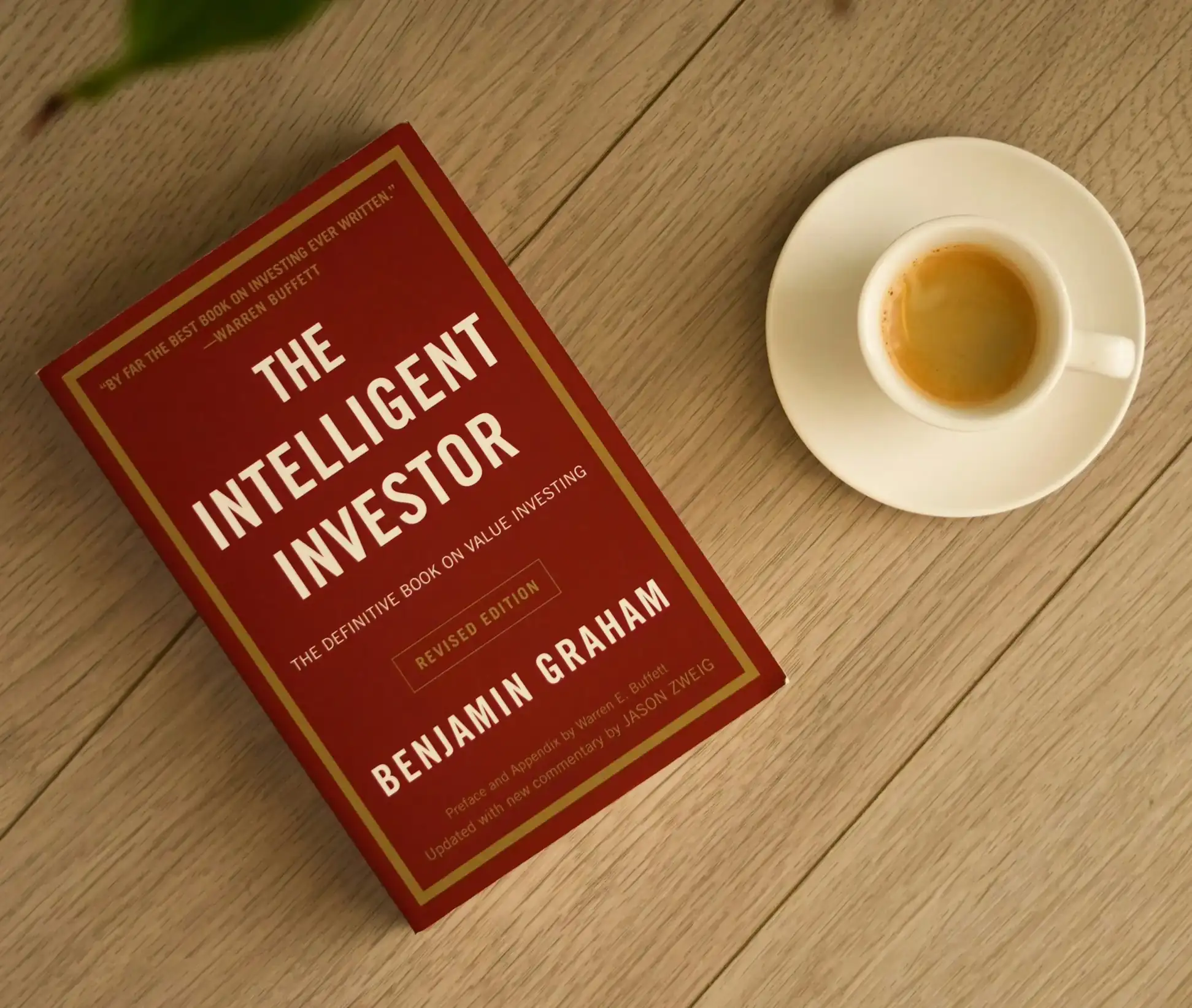
Most people approach the stock market as if it were a casino, a place where prices move randomly and success depends on luck or timing. Benjamin Graham spent his career demonstrating that this view is wrong. Prices move based on emotion. Value is determined by fundamentals. And the gap between the two is where genuine investment opportunity lives.
Graham's approach, which he called value investing, is built on a deceptively simple premise: buy stocks for less than they are worth. Not roughly less. Significantly less. And only when the evidence is strong enough to justify the purchase. His most famous student, Warren Buffett, used this framework to become one of the wealthiest people in history.
The Core Idea: Price Is Not the Same as Value
A stock's price is what you pay. The value of the underlying business is what you get. These two numbers are frequently different, sometimes dramatically so. The market, driven by collective human emotion, regularly prices businesses at levels that have little to do with their actual financial reality.
A business might be priced cheaply because of a single bad quarter, a temporary industry headwind, an unfashionable sector, or simply because no one is paying attention to it. None of those reasons affect the underlying quality or earning power of the business. The value investor ignores the noise and focuses on the fundamentals.
The Margin of Safety
The single most important concept in Graham's framework is the margin of safety. Never pay what a business is worth. Always pay significantly less, so that even if your analysis is imperfect, even if the business deteriorates somewhat, or even if the market takes longer to correct than you expect, you are still protected.
Graham typically required a discount of at least 25 to 33 percent from his estimate of intrinsic value before making a purchase. This requirement eliminates most investment opportunities at any given time. That is intentional. Graham was not looking for dozens of positions, he was looking for a small number of genuinely compelling ones where the odds were strongly in his favour.
What Graham Looked For
Graham developed specific, quantifiable criteria for identifying genuinely undervalued businesses, designed to filter out financially weak companies and speculative situations, leaving only businesses with a demonstrable record of quality and stability.
On the balance sheet: a current ratio above 1.5, long-term debt that does not exceed net current assets, and no history of net loss in the past decade. On earnings: at least ten consecutive years of positive earnings, and an earnings growth rate of at least one-third over the past ten years. On dividends: an uninterrupted record of dividend payments for at least twenty years. On valuation: a P/E ratio no higher than 15 and a price-to-book ratio no higher than 1.5.
The Graham Number
Graham also developed a formula that combines the P/E and price-to-book requirements into a single maximum price figure, now known as the Graham Number: the square root of 22.5 multiplied by earnings per share multiplied by book value per share.
If a stock's current price is below its Graham Number, it may warrant further investigation as a value investment candidate. The Graham Number does not make the investment decision for you, it identifies which stocks are worth looking at more closely. The qualitative judgement about business quality still requires careful human analysis.
Mr Market: Graham's Most Powerful Metaphor
To explain the relationship between a rational investor and the market's erratic behaviour, Graham created one of the most enduring metaphors in financial literature. Imagine that you own a share in a private business with a partner named Mr Market. Every single day, Mr Market shows up and offers to buy your share or sell you his, at a price based purely on his mood that day.
Some days Mr Market is euphoric and offers an absurdly high price. Other days he is despairing and offers a deeply low one. The rational investor's job is not to let Mr Market's mood determine their view of value, but to use his mood swings as opportunities. When he is excessively pessimistic, buy. When he is excessively optimistic, consider selling.

Value Investing vs Speculation
Graham drew a sharp distinction between investment and speculation. An investment operation, he wrote, is one which upon thorough analysis promises safety of principal and an adequate return. Everything else is speculation. By this definition, most activity in financial markets, momentum trading, chasing hot sectors, buying on rumour, is speculation, not investment.
Speculators depend on market movements to generate returns. Investors depend on the underlying earning power and asset value of the businesses they own. Over long periods, the fundamentals win. Short-term price movements are noise. Long-term business quality determines outcomes.
How Technology Changed Value Investing
Graham performed his analysis manually, working through financial statements company by company. The principles he developed remain completely valid, but the tools available today are vastly more powerful. AI-powered platforms can now screen thousands of stocks simultaneously against Graham's quantitative criteria, combining balance sheet analysis with sentiment data, sector positioning, and historical cycle correlations.
This means the research that once required days of manual work can be completed in seconds. A modern stock scanner can evaluate thousands of companies against Graham's current ratio calculator thresholds, enterprise value calculator metrics, and EBITDA calculator benchmarks simultaneously. The intelligence previously available only to professional fund managers is now accessible to individual investors through tools like the Graham Number calculator and comprehensive investment calculators. The principles are timeless. The tools are new.
Graham's Track Record: Why These Principles Work
Graham's ideas were not theoretical. Over the period from 1936 to 1956, his investment partnership achieved compound annual returns of approximately 17%, outperforming the Dow Jones Industrial Average consistently across two decades that included the post-war economic expansion, the Korean War, and multiple market cycles. This was achieved using systematic, rules-based analysis, not market timing or special access to information.
More compellingly, every investor who rigorously applied Graham's framework produced similar results. Walter Schloss, one of Graham's students, ran his fund for 45 years with a 21.3% compound annual return. Bill Ruane, another Graham student, produced comparable results at Sequoia Fund for decades. This consistency across multiple independent practitioners is what distinguishes Graham's approach from luck or survivorship bias.
Common Misunderstandings About Value Investing
Value investing is frequently misunderstood, and the misunderstandings are consequential. The first is that value investing means buying cheap stocks. It does not. It means buying good businesses at prices below their intrinsic value. A company trading at a low P/E because it is genuinely deteriorating is not a value investment, it is a value trap. Graham's criteria for business quality are as important as his valuation thresholds, and cannot be separated from them.
The second misunderstanding is that value investing no longer works because everyone knows about it. This confuses the principle with the difficulty of execution. The principle, buy quality assets below intrinsic value, is timeless and cannot be arbitraged away because it requires patience and discipline that most investors cannot consistently sustain. Quarterly performance pressure, career risk, and the psychological discomfort of holding unpopular stocks keep the opportunity alive even as the framework becomes more widely understood.
The third misunderstanding is that value investing requires years of waiting for results. Graham's framework was designed to identify situations where the evidence of undervaluation is sufficiently clear that the gap between price and value should close within 18 to 36 months. If the investment case requires an exceptional run of luck over a decade to materialise, the margin of safety is probably insufficient. Graham's approach is systematic, not merely patient.
How We Apply This at Worthmap
Our approach mirrors Graham's: systematic, quantitative, and evidence-led. Worthmap's free calculators, starting with the Graham Number, let you run his numbers yourself, and the stock screener in a free account at my.worthmap.com helps you narrow the list of companies worth a closer look. The judgement call about business quality still belongs to you.
Read: Investor Psychology & Contrarian Investing
Run the Graham Number Calculator
Worthmap helps you put Graham's framework to work: free Graham Number, current ratio, enterprise value and EBITDA calculators on the site, and a free account at my.worthmap.com with a net worth tracker and a stock screener to narrow down the companies worth studying.
Create free accountSummary
Benjamin Graham's value investing principles: intrinsic value, margin of safety, and Mr Market. The framework that shaped Warren Buffett's early career.

Written by
Federico RomaldiCo-Founder, Worthmap
Published: February 10, 2025 · Last updated: April 26, 2026
Federico is a co-founder of Worthmap, a multi-currency net worth tracker with free investing calculators. He writes the site’s articles on value investing, fundamental analysis and tracking wealth held in several currencies. He is not a licensed financial adviser.
Comments
Be the first to comment on this article.
Related Articles
Further Reading
Educational content only. This article is for informational and educational purposes and does not constitute financial, investment, tax, or legal advice. Worthmap is a wealth-tracking and analysis tool, not a registered investment adviser or broker-dealer. Markets carry risk and past performance does not guarantee future results. Always do your own research and consult a qualified financial adviser before making investment decisions.