
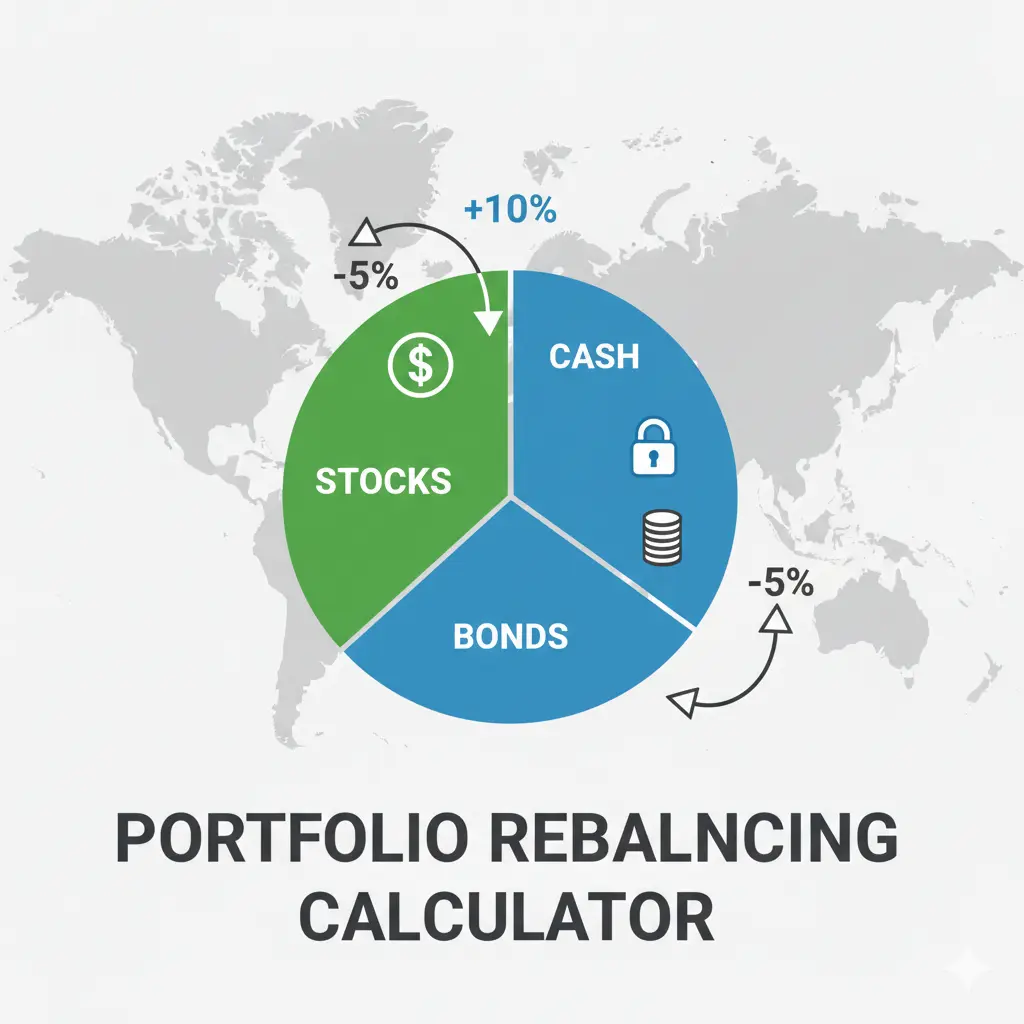
投资组合再平衡计算器
看看该卖什么、买什么,才能回到你想要的配置
按资产:让每项持仓回到它的占比。按货币:让每种货币回到它的占比。
结果的显示货币
结果里的每个金额都以这种货币显示。
你持有什么,以及你想要的配置
每项持仓一行:它今天值多少,以及你希望它在投资组合里占多少。
%
%
%
%
占比合计
卖出 A$5,000.00、买入 A$5,000.00,就能回到你想要的配置
这相当于调动你 A$100,000.00 中的 5.0%。下面几行写明该卖什么、买什么、各是多少。
逐项持仓来看
股票,本国市场
今天占你投资组合的 45.0%,而你想要 40.0%:从 A$45,000.00 到 A$40,000.00。
卖出 A$5,000.00
股票,世界其他地区
今天占你投资组合的 25.0%,而你想要 30.0%:从 A$25,000.00 到 A$30,000.00。
买入 A$5,000.00
债券
已经在你想要的 20.0% 上:A$20,000.00。
保持不动
现金
已经在你想要的 10.0% 上:A$10,000.00。
保持不动
两种做法
- 照上面列的卖出和买入。卖出可能要付手续费,有收益的话还可能要交税,这取决于你的券商和你住在哪里。
- 或者什么都不卖:追加 A$12,500.00 的新资金,只买入低于你想要的占比的那几项持仓。
- 股票,世界其他地区:买入 A$8,750.00
- 债券:买入 A$2,500.00
- 现金:买入 A$1,250.00
金额以 AUD 计,未扣除任何手续费或税。
这个计算器没有算进去的东西
它在你填的各项持仓之间调动资金,直到每一项都达到你想要的占比。它不知道你券商的手续费、收益要交的税,也不知道你最少能交易多少,所以下单之前请先查清这些。
今天的占比和你想要的占比
今天
45.0%
你想要
40.0%
今天
25.0%
你想要
30.0%
今天
20.0%
你想要
20.0%
今天
10.0%
你想要
10.0%
今天
你想要
| 持仓 | 今天的价值 | 今天的占比 | 你想要的占比 | 调整后的价值 | 该怎么做 | 金额 |
|---|---|---|---|---|---|---|
股票,本国市场 | A$45,000.00 | 45.0% | 40.0% | A$40,000.00 | 卖出 | A$5,000.00 |
股票,世界其他地区 | A$25,000.00 | 25.0% | 30.0% | A$30,000.00 | 买入 | A$5,000.00 |
债券 | A$20,000.00 | 20.0% | 20.0% | A$20,000.00 | 保持不变 | A$0.00 |
现金 | A$10,000.00 | 10.0% | 10.0% | A$10,000.00 | 保持不变 | A$0.00 |
长期跟踪您的投资组合
再平衡一次是个好的开始。有了 Worthmap 免费账户,你可以按货币记录自己的全部资产,查看以一种基础货币计算的净资产随时间的变化,这样你随时都能拿自己的资产组合和目标对照。免费方案目前处于测试阶段(beta)。
创建免费账户什么是投资组合再平衡?
投资组合再平衡是调整投资组合内资产权重的过程,使其重新与目标配置保持一致。
再平衡的目的不是最大化回报,而是维持您最初选择的风险水平。
为什么再平衡很重要
首先,它控制风险。没有再平衡,投资组合自然会向表现最好的资产类别倾斜。
其次,再平衡把纪律融进了投资过程。你卖掉一部分涨得最多的,补上落后的,是因为你的规则这样要求,而不是因为市场当天让你有什么感觉。
第三,再平衡使您的投资组合与财务目标保持一致。
如何使用此再平衡计算器
首先输入投资组合中每个资产类别或持仓及其当前价值。然后为每个设置目标配置百分比。
计算器会把你持有的和你想要的配置作对比,告诉你每项持仓要卖出或买入多少才能回到这个配置。每项持仓都有自己的货币,所有金额都会按你可以修改的汇率,换算成你为结果选定的货币。如果你持有不止一种货币,可以在页面顶部切换到“按货币再平衡”,看看你的钱在各种货币之间是怎么分布的,以及要调动多少才能达到你想要的分布。
何时应该再平衡?
基于日历的再平衡,就是按固定的时间表检查你的投资组合,每三个月、六个月或十二个月一次,不管它偏离了多少都调回去。这是最容易执行的规则。
基于阈值的再平衡,就是只有当某项持仓偏离目标超过你事先设定的限度(比如 5 个百分点)时才动手。它跟着市场的变化走,而不是跟着日历走。
这两种方法不管选哪一种,都把规则写下来,不管市场怎么走都照着做,这样你的决定就不会取决于当天的心情。
不卖出的再平衡:现金流方法
你也可以不卖出就完成再平衡:把新的资金投到低于自身占比的持仓上,而不是卖掉高于占比的那些。在卖出时要对收益征税的地方,不卖就没有这笔税,而你的投资组合照样朝你想要的配置靠拢。计算器会在“两种做法”下面把这条路算出来。需要多少新资金,取决于你的配置偏离了多远。
需要避免的常见再平衡错误
第一个错误是根本不做再平衡:目标配置设定一次,就再也不看,于是投资组合跟着市场走了好几年。这可能让你承担的风险比当初选定的大得多。
再平衡做得太频繁是另一个陷阱。每次卖出都可能要付手续费,在对收益征税的地方还要交税。每周做一次,或者市场稍有波动就做一次,这些成本就成倍增加。
基于情绪而非目标的再平衡也是有问题的。坚持您预定的目标,让流程发挥作用。
常见问题
你实际持有多少项就填多少项,最多是这个计算器支持的 10 行。简单的投资组合可能只有三项(本国股票、外国股票、债券)。更细的组合可以把小公司、新兴市场、房地产、大宗商品和现金单独列出来。
每项持仓都有自己的货币。计算器会按你可以修改的汇率,把所有金额换算成你为结果选定的货币,这样要卖出和买入的金额才能放在一起比较。在页面顶部切换到“按货币再平衡”,就能按货币把持仓归类,看到你的投资组合有多少落在每种货币上,以及要调动多少才能达到你想要的分布。
再平衡是管理风险的办法,不是多赚钱的办法。它让你的投资组合保持在你选定的风险水平上。它最后是领先还是落后于一个放着不动的组合,取决于市场之后怎么走,而这一点没有人能提前知道。
理想情况下,您应该将所有账户(经纪、退休、储蓄)的整个投资组合视为一个综合配置。
没有放之四海而皆准的答案。它取决于你的年龄、你的目标、你打算投资多久,以及多大的下跌你能扛住而不卖出。债券和现金多一些,波动一般就小一些;股票多一些,波动一般就大一些。先选好配置,再用这个计算器把它守住。
资产配置、夏普比率与回撤:衡量投资组合质量
目标配置是长期投资组合里最重大的决定之一,因为它决定了你有多少钱押在每一类投资上。你填进这个计算器的占比,应该反映你打算投资多久、多大的下跌你能扛住,以及你需要多少收入。市场一旦开始让配置走样,再平衡就是你守住这个决定的办法。
夏普比率衡量的是每承担一份风险换来多少回报:投资组合的回报高出无风险利率的部分,除以回报的波动幅度(它的标准差)。索提诺比率的算法相同,但只计入向下的波动,所以不会因为一个组合涨得猛而给它扣分。两个回报相近的投资组合里,比率更高的那个是用更小的风险做到的。这个计算器两个比率都不计算。
回撤是投资组合的价值从一个高点跌到随后的低点的跌幅。最大回撤是有记录以来最大的一次这种下跌。它之所以重要,是因为大跌的时候最难坚持计划。一个在长期上涨后偏向股票的投资组合,押在股票上的钱比你选定的配置更多,所以股票下跌时它会亏得更多:这正是再平衡要控制的风险。
费用率是持有一只基金每年的成本,用你持有金额的百分比来表示。一只每年收 1% 的基金,你每持有 100,000,它每年就拿走 1,000,不管基金是涨是跌。这个计算器不计入基金成本,所以当两只基金在你的配置里能填同一个位置时,请你自己比较它们的成本。
了解再平衡背后的策略: 资本配置指南 →
把整个投资组合放在一个地方
再平衡的第一步是清楚自己持有什么。有了 Worthmap 免费账户,你可以记录分布在不同券商、货币和资产类别中的资产,或者导入 PDF 或 CSV 格式的券商对账单,再以你选定的一种基础货币查看净资产。免费方案目前处于测试阶段(beta)。
创建免费账户